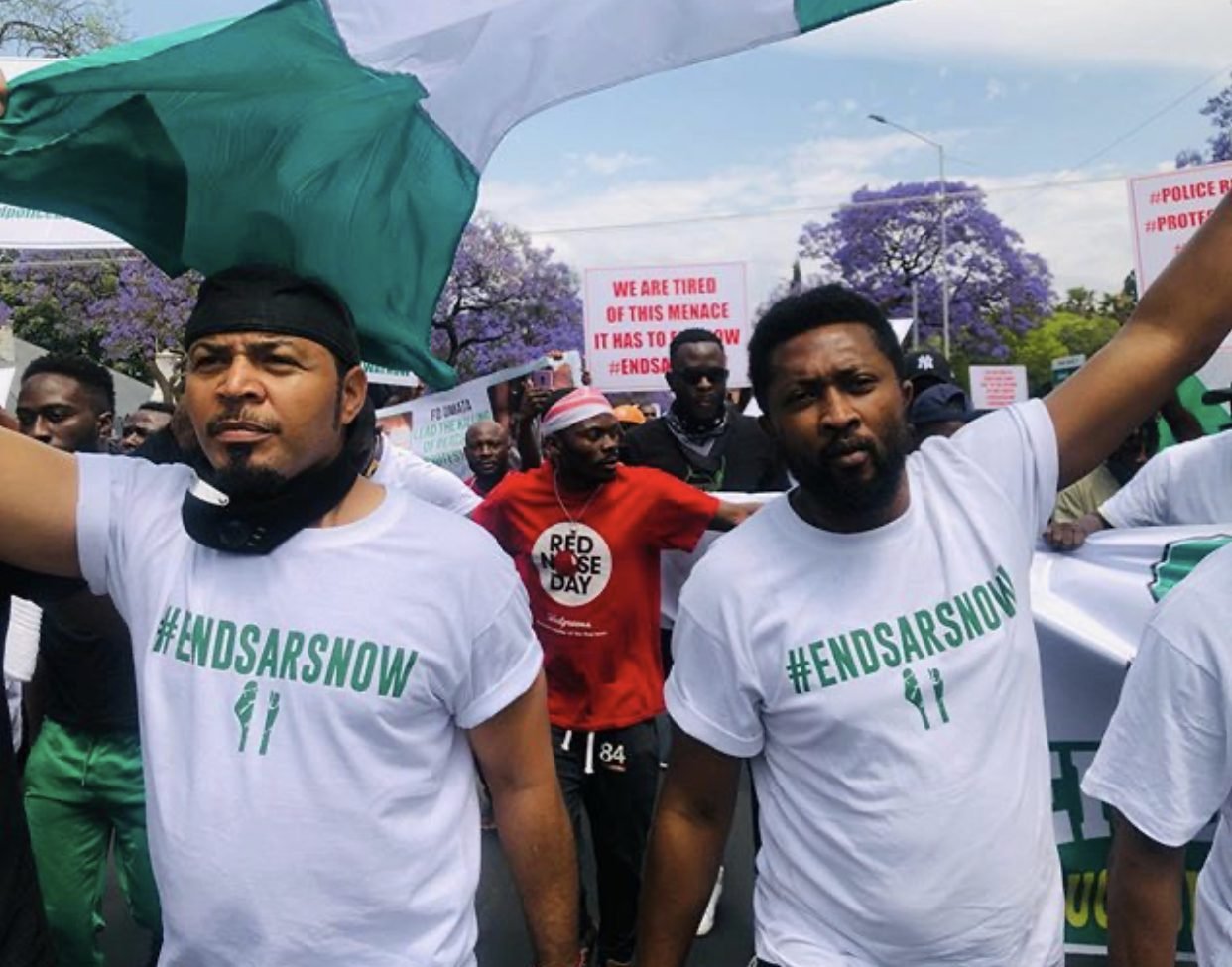
“ARTvocacy” is not an officially defined word, but its meaning is almost self-evident: advocacy through art, by artists. Across Nigeria’s cultural history, this idea has always existed in practice, long before it found a name. When Etim Effiong’s directorial debut The Herd earned Linda Ejiofor the Best Supporting Actress award at the 2026 AMVCA, audiences applauded not just the performance, but its emotional representation. It was a stark, cinematic reflection of a national grief—a mirror held up to the thousands of families devastated by the wave of kidnappings across Nigeria in the first half of 2026 alone.
Long before that, music had already taken up the role of commentary. Idris AbdulKareem’s “Jaga Jaga” and African China’s “Mr. President” did not merely entertain; they named frustration. They stood directly in the lineage of Fela Kuti, Onyeka Onwenu, Majek Fashek, and Sunny Okosun—voices that weaponized sound as resistance.
Today, that baton has been passed to artists like Asa, 2Baba, 9ice, Burna Boy, M.I Abaga, Vector, Runtown, Falz The Bhad Guy and even newer cultural figures like NasBoi, Mr Macaroni and Taooma, Timi Agbaje who now use performance and digital satire as tools of commentary. Yet year after year, Nigeria remains caught in familiar cycles of poverty, inflation, scarcity, and insecurity layered up as Kidnapping, Banditry, ethnic and religious attacks. And at the center of these recurring conversations are voices one would expect from pulpits or policy tables, but from studios, stages, ring lights, and social media timelines.
In this digital ecosystem, tragedy no longer exists in isolation. When recent kidnapping incidents occurred in Oyo, Borno, Zamfara, social media reacted almost instantly. But within hours, the focus often shifts from the event itself to a different kind of public inquiry: who has spoken, who is silent, and who is perceived to be on the “right side.”
In Nigeria’s online public sphere, crises are not limited to just national emergencies. There are also visibility tests. Musicians, actors, and even gospel artists are often expected to respond quickly, publicly, and in emotionally appropriate ways. Silence, in many cases, is no longer read as neutrality, it is interpreted as indifference.
But Why Should They Even Speak Up? When Nigerian-born British Rapper Skepta came on X(formerly Twitter) to tag President Bola Ahmed Tinubu, demanding he get active and address the injustice going on in Nigeria, it fueled the need for our homebase artistes to further engage in the discourse going on. Some lend voices. Some made videos, posts and called for urgent intervention. Others kept mum. Usually, a random X user would’ve been picked up for laws unknown. But this is the Big Smoke of London. Even Portable told Skepta, his “Alanu“, that freedom after speaking up is not guaranteed in the country. Every artist for himself. The truth is that Nigerian entertainers now occupy platforms as influential as institutions. Fanbases like FC, 30BG, and Outsiders alone can mobilize stadium-level attention. In a country where public emotion is deeply tied to cultural figures, audiences often seek validation of their own frustrations through celebrities. Artists are not just entertainers; they are cultural intermediaries between the public and power, translating the anxieties, dreams, and frustrations of ordinary people into forms that can be heard, shared, and remembered. They are mirrors, megaphones, and mood boards of society.
We have seen this influence translate into politics. One of the most recognizable examples remains the campaign song “Gbagbe by Ambode”, linked to Former Lagos State Governor, Akinwunmi Ambode’s political campaign featuring Yemi Alade, MI, Flavour, Banky W, Olamide and Dammy Krane. If they can pull crowds and support during electioneering periods, their voices should also be loud and void of politicking? I mean if voices can be mobilized so effectively in moments of political promotion, why does that same energy dissipate when the subject is accountability? The final, sobering question is whether “ARTvocacy” actually moves the needle, or if it simply punishes the artist. Meanwhile, many times regardless of how loud, prominent and influential the voices can get, a final thought is how much has changed when they speak, protest? Some get backlashed like Yinka Alaseyori, others get cancelled, some get beaten like Ruggedman. Even Davido faced severe backlash in late 2024 for his comments on a viral episode of The Big Homies House podcast, where he advised Black Americans against relocating to Nigeria, citing poor leadership, high fuel costs, and a weakened exchange rate, ultimately stating the economy was “in shambles” In February 2017, Nigerian musician Innocent Idibia, widely known as 2face or Tuface, canceled a planned nationwide anti-government protest over security concerns and advice from the police. The Nigeria Police Force and the Lagos State Police Command had warned him to stop the rally, citing intelligence that hoodlums planned to hijack the event. It’s unending.
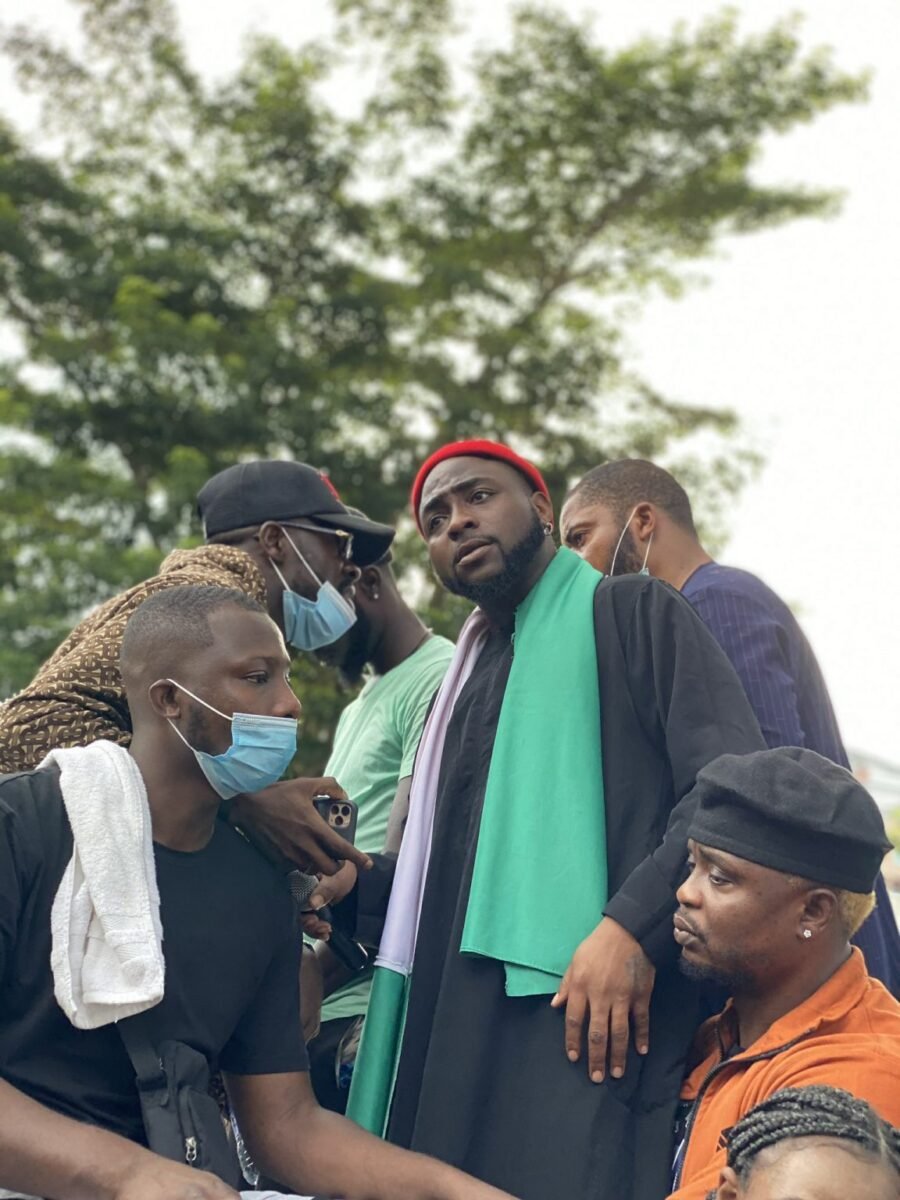
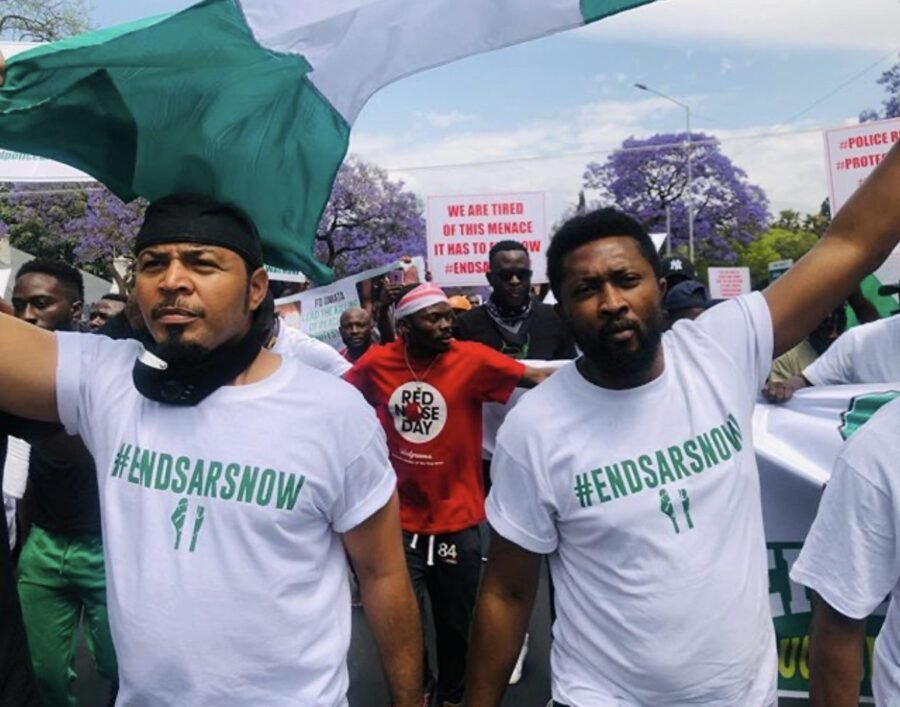
The #EndSARS movement marked the peak of Nigerian digital unity. Artists, influencers, and citizens briefly spoke in one direction, demanding accountability over police brutality. The visibility was global. The momentum was undeniable. Within that moment, DJ Switch became a symbolic figure of live digital resistance, streaming events from the Lekki Toll Gate in real time. Her visibility came with consequences beyond the internet, raising a question that still lingers: what does it cost to be clearly seen in moments of national tension? Similarly, figures like Mr Macaroni experienced direct consequences, including arrest and detention during the #OccupyLekkiTollGate protests prove that visibility in activism carries weight beyond engagement metrics. And still, the outcome remains contested. Attention surged. Resolution didn’t. But there was momentum. There was a sense of purpose in rallying against anyhowness. We have seen an assumed “Rape Festival” investigated. A deceitful Mirabel, Blessing CEO probed for their acts. Influence spoke and actions were taken. Seun Kuti offers a more skeptical reading of all this. For him, social media activism often creates the illusion of movement without guaranteeing impact. In his view, history repeatedly shows cycles of outrage that fade without structural resolution. And perhaps that is the uncomfortable truth and also why Dayo Amusa’s recent remarks resonated beyond the entertainment industry. In pushing back against the expectation that creatives must respond to every national crisis, she highlights a reality many people overlook: artists are citizens, not institutions. They can amplify conversations, shape culture, and even mobilise public sentiment, but they cannot single-handedly fix the problems they sing, act, joke, or post about.
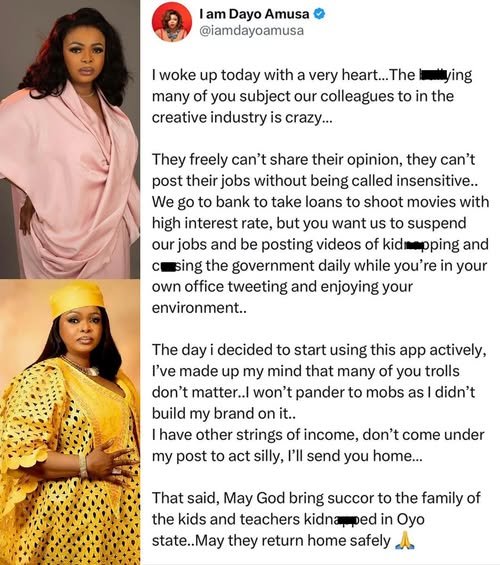
The Nigerian public is right to expect empathy from its celebrities. After all, influence comes with responsibility. But somewhere between demanding accountability and demanding constant performance, the line has become blurred. The result is a culture where every tragedy is followed by a roll call of who spoke and who did not, as though national progress depends on celebrity commentary. Maybe the conversation should move beyond whether artists are speaking enough. The more important question is why, in a country with elected leaders, functioning institutions, and public offices, so much hope is repeatedly placed on people whose primary job was never governance in the first place.