There’s a particular kind of artist who doesn’t just make music to fit a moment; they become the moment, in flesh and props and persona, so that you can trace their entire interior evolution just by watching what they carry on stage. Rema has always been that kind of artist. And right now, he may be carrying his next transformation around his neck. The Afrobeats Princes’ career has never moved in straight lines. Every major chapter has arrived with its own mythology, its own emotional language and its own symbols. The teddy bear and the anime. The gothic raver and the colony of bats. Now, perhaps, an angel. Truth is, Individually, they look like clever branding. However, when you pull them collectively, they begin to resemble something else entirely: maybe a visual autobiography.
All we can deduce is a young man documenting his own evolution in public. Whether consciously or instinctively, Rema has spent the last seven years doing something very few African pop stars have attempted. He has been building eras that are psychological before they are commercial. Go back far enough and you find Rema clutching a teddy bear, an image that, on the surface, reads as a quirky stage prop but was really a statement of innocence. Here was a teenager from Benin City, barely out of adolescence, walking into an industry built on swagger and bravado, and choosing instead to hold onto something soft. The teddy bear wasn’t a costume. It was a character. It told you Rema was arriving as a boy who still belonged partly to childhood, even as he was being thrust into stardom: vulnerable, tender, a little wide-eyed about the whole thing. For the records borne out of his babyboy era, they felt like someone discovering love, heartbreak, lust and fame at the same time. Songs such as Dumebi, Corny, Woman and later Soundgasm carried emotional curiosity rather than emotional exhaustion. That same tenderness ran straight through Rave & Roses, the album that made him the highest-streamed African debut artist in Spotify’s history off the strength of “Calm Down,” a record about romance and youthful feeling, not menace.
Then came HEIS, and everything about Rema’s posture changed. The teddy bear was gone. In its place: a cigarette between his fingers, the gothic theater of bats and skeletons, and a sound he built almost single-handedly, Afro-Rave, a fusion of Afrobeats with trap and electronic distortion that didn’t ask to be liked so much as it demanded to be felt. This was Rema shedding the boy entirely. HEIS was loud, chaotic and unapologetic. It sounded like an artist who had survived the weight of overnight global fame and decided to embrace discomfort rather than familiarity. Tracks like March Am, Kelebu, Azaman and Ozeba were not engineered for easy consumption. They were abrasive, confrontational and deliberately excessive. They felt less like pop records and more like war chants. If Rave & Roses introduced the world to a young romantic, HEIS introduced them to someone who had outgrown innocence. This was no longer the teenager navigating first love and newfound fame. This was an artist who had seen the machinery of global success, and endured the scrutiny that comes with it. We have seen him get bullied in the industry but not anymore. He calls himself “werey”. Who wants to battle a madman from Benin?
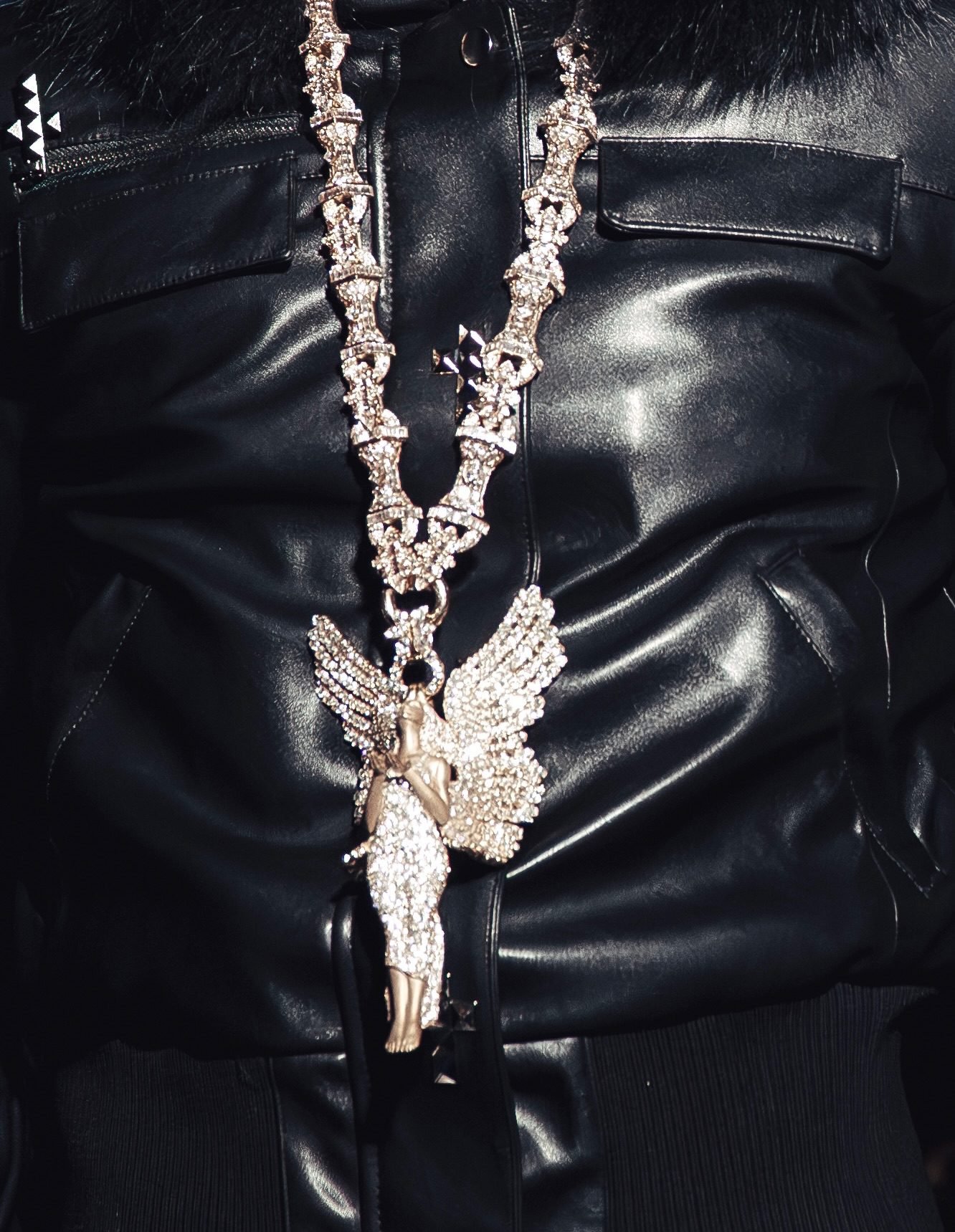
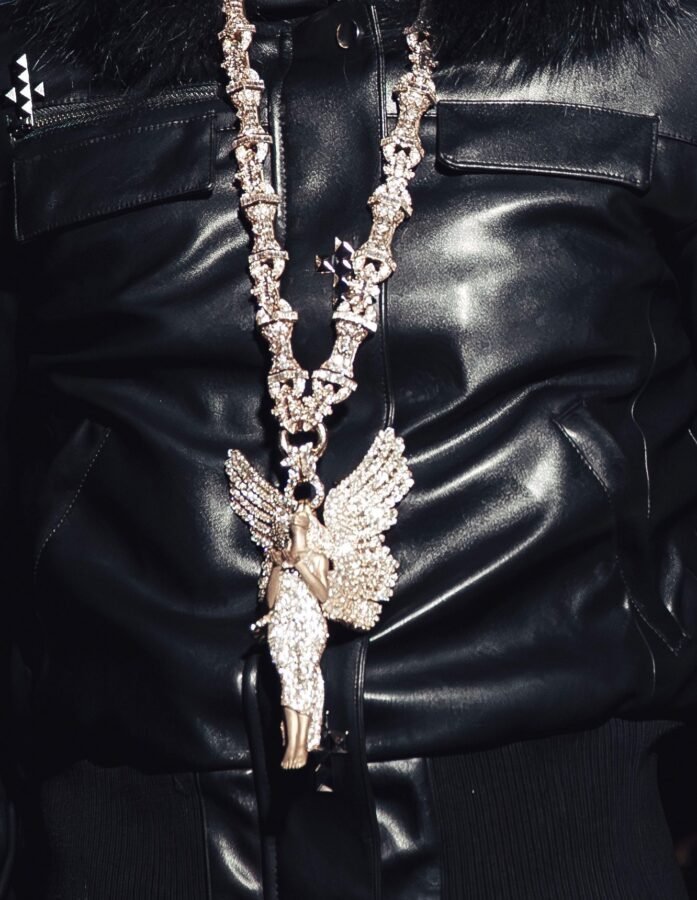
Before BENIN BOYS with Shallipopi, Westernized and Christian-centric audiences often mislabeled Rema’s bat imagery and masks as “demonic” or “Illuminati” signs. Instead of backing down, he and Shallipopi leaned directly into their heritage, transforming the indigenous Benin bat motif; a constant sight over Benin City’s Ring Road, into a sharp, late-night Gothic aesthetic. It was a declaration that he is the raw, nocturnal ruler of the new sound. And now, an angel. In June 2026, Benny Da Jeweler delivered Rema a one-of-one custom piece, a 3D iced-out angel pendant on a never-before-made pillar-link chain, over a kilogram of gold flooded with 326 carats of diamonds in a mosaic “snow-setting.” It arrived just ahead of his performance at the opening ceremony of the 2026 FIFA World Cup, a stage few African artists have ever stood on. The bats and skeletons that defined HEIS are gone from his neck now, replaced by something that speaks an entirely different language: divinity, elevation, protection.
If you’ve followed Rema’s pattern, boy to gothic rebel, tenderness to defiance, the angel isn’t really a surprise. It’s the logical next sentence in a story he’s been telling about himself the whole time. What separates Rema from a lot of his peers is that his reinventions never feel like marketing decisions handed down by a label. They feel personal, in fact, they are personal, almost philosophical, like a man genuinely working through who he is in real time, and inviting the public to witness it. He’s said himself during his Author’s Note on HIES Anniversary; that he doesn’t want fans walking into his projects with fixed expectations, and that resistance to predictability is itself part of his artistry. It suggests an artist who isn’t simply chasing trends but is, in his own way, searching: for meaning, for elevation, for some version of himself worth becoming next.
There’s a reason people describe his music as coming from somewhere beyond the ordinary, a sense that he sings not just from experience but from a kind of knowledge, a celestial vantage point most pop stars don’t claim or earn. The teddy bear, the goth, the angel: these aren’t random props. They’re chapters in a spiritual autobiography being written one era at a time. Plenty of artists have promised reinvention and instead delivered a costume change with no substance behind it. But Rema isn’t plenty of artists. The boy with the teddy bear delivered the most-streamed African debut album in Spotify’s history. The gothic rebel with a sinister HE HE HE laughter built an entire subgenre (Afrorave) and made it global. Each time people might have doubted whether the next version of Rema could match the last, he answered with the work. If the Angel era is indeed where he’s headed, there’s little reason to bet against him now.
He is Rema. He is the prince of Afrobeats. And if his pattern holds, this won’t be a fall from grace into reinvention; it’ll be an ascension, exactly as the wings promise. But perhaps we’re getting ahead of ourselves. The pendant could simply be a nod to Los Angeles, the “City of Angels,” where Rema performed at the 2026 FIFA World Cup opening ceremony alongside Lisa and Anitta. If that’s the case, then any reading of the angel as the start of a new artistic chapter remains just that: a reading. Still, Rema has earned the benefit of interpretation. His symbols have rarely existed without purpose, and they often make sense only after the music arrives. The real question, then, isn’t whether the angel becomes another successful aesthetic. Rema has already proven he can create eras. The more interesting question is who comes after the boy and the rebel. If history is any guide, we’ll understand the angel soon enough. And when we do, we may look back on this pendant the same way we now remember the teddy bear: not as jewellery or branding, but as the first clue to a story Rema had already begun telling.