The bromance between Football and Music is a magical, undeniable force. While stadium chants and slogans build a fierce sense of community, it is the everlasting spice of the pre-match anthem that turns a sporting event into pure theater. World Cup anthems do far more than just entertain. The music actively shifts the players’ adrenaline levels and focus, locking them into a state of absolute combat readiness. At the exact same time, they unite fans worldwide and keep the tournament’s spirit alive decades after the final whistle. Think of the stadium-shaking euphoria of K’naan’s “Waving Flag” in 2010, or Shakira’s timeless, globally unifying “Waka Waka (This Time for Africa)”.
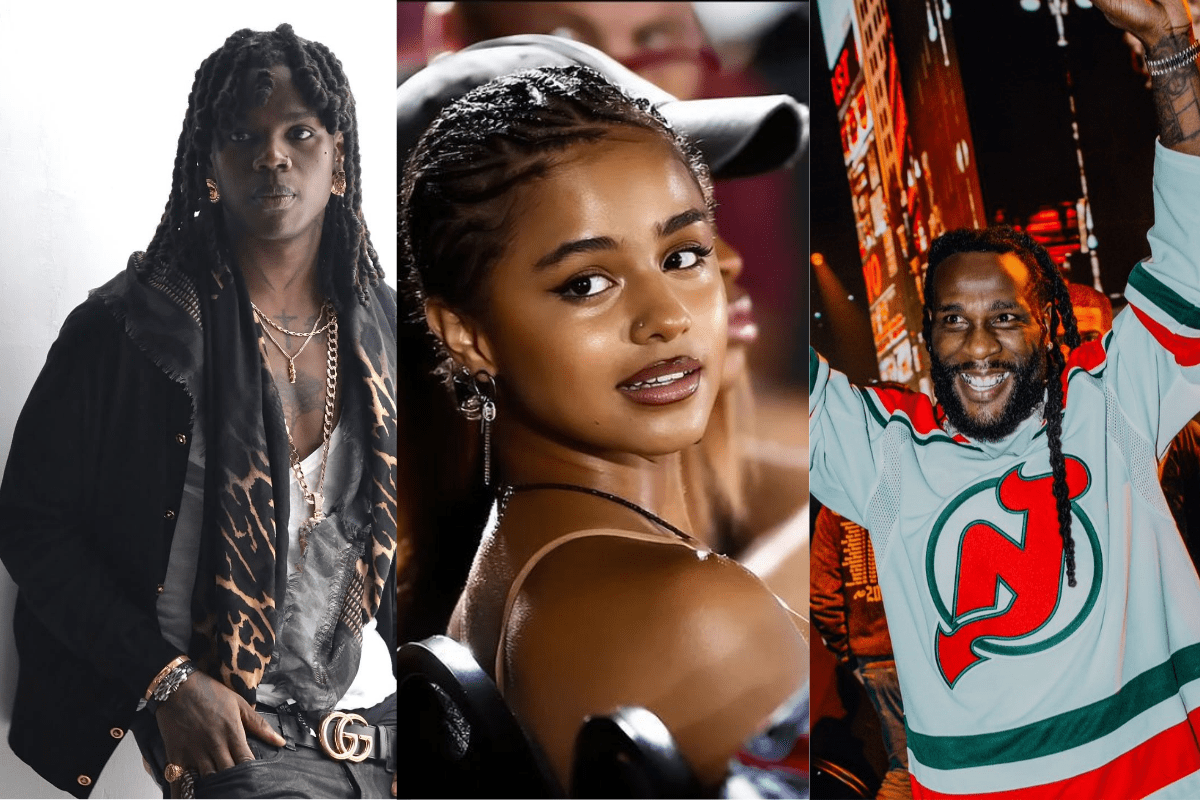
Nigeria’s absence on the pitch at the 2026 FIFA World Cup is being overshadowed by a historic Afrobeats takeover, with Burna Boy, Davido, Rema, and Ayra Starr officially representing the green-white-green on football’s biggest global stage. The release of the Official FIFA World Cup 2026 Album features all four Nigerian icons, locking in the global sound of the tournament even without the Super Eagles present. The album’s full 18-track lineup also features the likes of Future and Tyla, Stormzy, The Rolling Stones, Daddy Yankee, and 21 Savage.
From the start of the competition, Nigeria’s absence on the field has been felt especially when their African counterparts, the Bafana Bafana of South Africa displayed a shambolic performance against Co-host Mexico, but its presence in sound has only grown stronger. Burna Boy’s “Dai Dai” with Shakira serves as the official song of the tournament and the theme for the FIFA Education Fund, with songwriting credits that include Ed Sheeran among others. Rema follows with “Goals,” a collaboration with Thai rapper and singer Lisa and Brazilian singer Anitta that brings Afrobeats, K-pop, and Latin pop together on one track released on 21 May and already doing numbers. Davido features on “No Place Like Home” alongside electronic music collective Major Lazer and Canadian pop icon Nelly Furtado, while Ayra Starr rounds off Nigeria’s representation with “Show Me,” alongside American rapper Latto.
Instead of a single opening show, FIFA is launching a “Trilogy of Opening Ceremonies” across three different nations. Nigerian music is heavily anchored at the two largest kick-off spectacles. First, it was Davido, who dripped on stage in a customised outfit honouring the pupils and teachers, performed as a headliner at the official FIFA World Cup Countdown Concert on June 10, 2026, at the Crypto.com Arena in Los Angeles. His set was highly energetic, featuring hits like “Fall,” “Unavailable,” and “With You” before joining Major Lazer to perform the World Cup 2026 anthem, “No Place Like Home”.
Meanwhile, this is also not his first as the Grammy nominated Singer in 2022, became one of the faces of “Hayya Hayya (Better Together),” the first official soundtrack released for the Qatar World Cup. Four years later, he returned to the FIFA stage ensuring that Afrobeats remained central to the tournament’s entertainment identity. Getting off to an energetic start at Mexico City’s legendary Estadio Azteca for the 2026 World Cup opening ceremony, Burna Boy and Shakira delivered a cultural collision. Shakira, the undisputed and eternal Queen of World Cup Anthems, kicked things off on the pitch with the kind of hip-shaking choreography that reminded spectators of her longevity especially with FIFA. while Nigeria’s own “African Giant” stormed the stage, injecting his signature effortless Afro-fusion swagger right into her high-octane Latin pop wavelength. Who else to pair with the Latino Queen if not Odogwu?
Prior to their performance, the song is already bubbling on the top 100, topping charts and adding streams with 159 million views on Youtube for the official video, while the live performance sipped over 30 million views as of today. For his own performance, the Prince of Afrobeats, Rema electrified the opening ceremony Friday night at SoFi Stadium, joining BLACKPINK’s Lisa and Brazil’s Anitta for the live debut of their joint single, Goals. For an artist who is not new on the sporting scene, having made history in 2023 by becoming the first African artist to ever perform at the Ballon d’Or awards, Rema held his performance tight and rave-y. Ayra Starr known for always blending with any other genres joined American rapper, Latto on a track titled “Show Me,” a song she carried from start to finish. This feat should not be read as consolation for Nigeria’s absence, but as a deeper expression of cultural integration where music, identity, race, and global belonging intersect on football’s most visible stage.
In truth, Afrobeats’ presence at the World Cup did not begin in 2026. It traces back to the moment Africa first hosted the tournament in South Africa in 2010, when artists like Femi Kuti and 2Baba helped project the continent’s sonic identity into the global football consciousness. That moment signalled something larger than performance, it was cultural placement. In a Digimillennials article in 2025, Afrobeats’ rise inside football culture was already visible in a different space entirely—the locker room. The genre had become a fixture in team environments across Europe, influencing pre-match energy, celebration rituals, and even stadium soundtracks. It is now common to hear Afrobeats not just in stands, but in dressing rooms, tunnels, and training grounds.
Songs like Fireboy DML’s “Champion” and Focalista and Davido’s “Champion Sound” have become unofficial anthems of winning moments, while Burna Boy’s “Last Last” mostly serves a song for bants and teases.
On the bright side, this is a solid win for the genre and the artists. For Burna Boy, it reinforces an already global run, deepening his reach with audiences that now see him as a constant presence in major international cultural moments. Davido, meanwhile, continues to consolidate his World Cup era presence since Qatar 2022, steadily moving from featured contributor to a recognisable FIFA-stage figure whose name now sits comfortably within football’s entertainment ecosystem. Rema’s presence adds another layer of validation to the new Afrobeats wave. Having already crossed elite cultural thresholds like the Ballon d’Or stage, the World Cup offers an even broader canvas, one where his performance is not just seen, but felt across continents.
And for Ayra Starr, Sabi Girl gets a quiet but powerful lift of its own. Exposure at this level translates into new listeners, wider discovery, and a streaming surge driven by global curiosity rather than local momentum alone. Her incoming album, Star Girl, might get a surge after this feat. This is a testament that, heading into the next edition of the World Cup, a Nigerian act will not just be present in the global conversation but almost certainly included in the official album itself. What is unfolding is no longer an occasional representation, but a pattern too consistent to ignore—Afrobeats is steadily finding its permanent seat at football’s biggest table and the Green-White-Green is riding on that representation.