There was a time when listening carefully to Nigerian music felt like opening a book. That tradition did not begin with hip-hop or afrobeats, it began centuries earlier. Long before publishing houses, streaming platforms or even radio, Africa had its own information system. Griots, court musicians and praise singers were more than entertainers; they were historians, archivists and custodians of collective memory. They preserved kingdoms through song, documented lineages through oral poetry, and passed moral instruction from one generation to the next. Music was never simply sound. It was one of society’s oldest libraries.
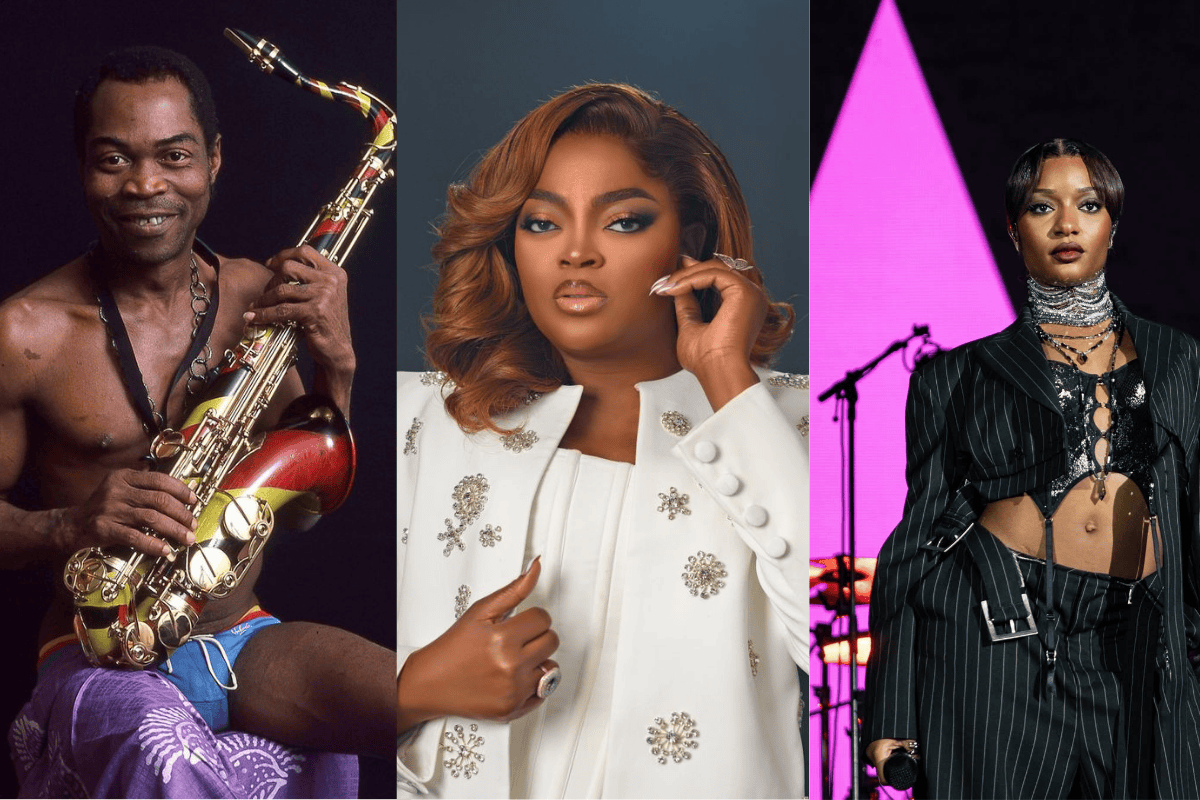
Modern Nigerian musicians inherited that responsibility, whether they set out to or not. A generation encountered civic consciousness through Fela Kuti before they understood constitutional democracy. Many first confronted the realities of harassment through Eedris Abdulkareem’s Mr. Lecturer. Songs about military rule, corruption, poverty and inequality reached listeners who might never open a political science textbook. Even the love songs carried philosophy: Onyeka Onwenu, Sunny Okosun, Majek Fashek, Beautiful Nubia, Sound Sultan, Styl Plus, 2Baba. Their records explored dignity, responsibility, perseverance, community and nationhood without sacrificing replay value. They proved accessibility never required intellectual compromise. Hip-hop extended that inheritance rather than replacing it. MI Abaga slipped history, economics and global politics into punchlines that rewarded curious listeners. Mode Nine turned language itself into performance. Vector built verses out of mythology and social commentary. AQ wrote albums that read like essays on Nigerian society. Show Dem Camp documented the anxieties of urban life with something close to journalistic precision. None of these artists asked audiences to lower their expectations before pressing play. If anything, they quietly raised them.
For a long stretch, roughly the late 2000s through the mid-2010s, the industry’s own structures reflected those values. The Headies’ “Lyricist on the Roll” category was one of Nigerian music’s most respected honours, and fans debated rhyme schemes, metaphor and storytelling with the seriousness usually reserved for literary criticism. Mode Nine took the first one in 2006. Vector won it in 2012 for “Angeli,” the same year he took Best Rap Single. AQ won it in 2022 for “The Last Cypher.” Payper Corleone won in 2023 for “Fly Talk Only.” The award celebrated not just who could rap, but who could write. Cyphers reinforced the same culture. Chocolate City‘s fiftieth-anniversary-of-hip-hop cypher put MI Abaga, Jesse Jagz, Ice Prince, AQ, Loose Kaynon and Blaqbonez on one beat and let the chips fall. The Hennessy Artistry Cyphers ran for over a decade, forcing Falz, Vector, MI, Jesse Jagz, CDQ, Show Dem Camp and a dozen others to show up every year and prove they still had it. Reputations were made, or dismantled, in a single verse, because audiences had been conditioned to reward craftsmanship over noise.
Even album rollouts reflected that ambition. Artists built entire worlds around a project: documentaries, conceptual trailers, cryptic campaigns, newspaper-inspired artwork that invited you to interpret an idea before you’d heard a single track. Falz’s Moral Instruction, released as “re-education and re-orientation” and later Album of the Year at the Headies, came with its own short film, The Curriculum, walking listeners through every theme on the record: police brutality, religious hypocrisy, internet fraud. Show Dem Camp‘s Clone Wars Vol. IV: These Buhari Times played like a document of what it actually felt like to be young, broke and anxious under a specific government. Paybac Iboro‘s The Biggest Tree was built entirely around depression, years before that was a comfortable subject in Nigerian music. Albums arrived as bodies of work, not playlists assembled for algorithmic consumption. Art demanded participation, and audiences responded with curiosity. Today the Lyricist on the Roll category doesn’t consistently make the Headies broadcast, it was one of ten categories quietly left unannounced when the 2025 show ran out of time. That’s not really a story about artists losing ability. It’s a story about what the culture industry has stopped bothering to protect.
We now celebrate opening-day streams before we discuss songwriting. We applaud chart position before we ask what a song is actually about. We measure impact in virality rather than longevity. None of those metrics are inherently harmful, the industry has always needed commerce to survive, and pretending fine words alone pay bills would be its own kind of dishonesty. The problem is what happens when those metrics become the only measure of success: depth stops being expected and starts being optional, a personal flourish rather than a professional standard. To be clear, the writing hasn’t disappeared, it’s been decentered. Blaqbonez won Best Rap Album at the Headies in 2023. Qing Madi took Songwriter of the Year in 2025. There’s a whole underground still doing the work, your Psycho YPs, your Barrylanez, your Maison2500s, rapping with the same density as the golden-era names, just without the label muscle or radio push to make it unavoidable. That’s the more honest version of this complaint: lyricism didn’t die, it stopped being the fastest route to the top. In the old era, bars were the shortcut to relevance. Now they’re a niche an artist pursues in spite of the industry’s incentives, not because of them.
This isn’t an argument for artists to be lectured back into consciousness, and it isn’t an attack on commercial artists or anyone else currently winning. They’re responding rationally to what the market rewards; that’s not a character flaw, it’s an incentive problem. The golden era wasn’t humourless either, Vector still flexed, SDC still partied, MI still talked his talk. What made it different is that even the most commercial records had a floor under them. You couldn’t release a project with absolutely nothing underneath the punchlines and still be considered great. That floor is what’s gone missing, not the individual talent to build one.
Looking at the Nollywood’s version of the same retreat, films show the same pattern. Nigeria’s skit economy is now valued at roughly ₦50 billion, the third-largest entertainment sector in the country, and Nollywood has responded by pulling skit-makers directly into movies, sometimes brilliantly, sometimes as a pure box-office shortcut. When it works, a comedian like Mr Macaroni, or Skitmaker like Kidd Baby disappears into a serious role and earns it. When it doesn’t, you get a cast list built for social media traction rather than story, a film that opens huge on name recognition and says nothing once the lights come up. Then there’s the recycled romance formula: strangers thrown together, friction dressed up as chemistry, a “realization” scene, a wedding or almost-wedding by the credits. Romance isn’t the problem. The problem is how much of what gets greenlit is the same shape wearing a different cast, optimized for an opening weekend rather than for saying anything new about how Nigerians actually love, fight or grow. The industry knows the formula sells, so the formula keeps getting funded, and the box office charts quietly become “proof” that audiences only want this. Maybe they do, right now. That doesn’t mean it’s the only thing worth funding, or that funding it exclusively doesn’t shape what a generation comes to expect from a story.
We often lament that young Nigerians no longer read enough. But reading hasn’t disappeared, it has changed form. Millions of people spend hours every day inside lyrics, films, podcasts, comedy, livestreams, captions and short-form videos. They are still learning. Still absorbing ideas. Still being shaped by the stories put in front of them. So the “Olodo Uprising” conversation was never really about Peller, Carter Efe or a fake job advert, or TikTok being a bad influence. Those are symptoms. The real subject is what happens when a society’s loudest cultural institutions stop rewarding curiosity and start rewarding attention alone. It’s what happens when the industry that once functioned as one of the nation’s most effective classrooms quietly stops recognising itself as one.
The griots didn’t have algorithms deciding what got remembered. Nigerian entertainment does now, and too often its biggest institutions have chosen to follow the algorithm’s incentives instead of challenging them. The result is a culture where attention travels faster than depth, and popularity is increasingly mistaken for permanence. The question was never whether this generation is capable of learning from its music and films. Fela, Falz, MI and Show Dem Camp, Kunle Afolayan, Funke Akindele, Wale and Akin Davies (My Father’s Shadow) Blessing Uzzi among others already proved that it’s possible at scale. The question is whether the culture industry (labels, platforms, award bodies, distributors) and the audiences feeding all of it still want to be that kind of classroom or have decided attention is reward enough on its own.