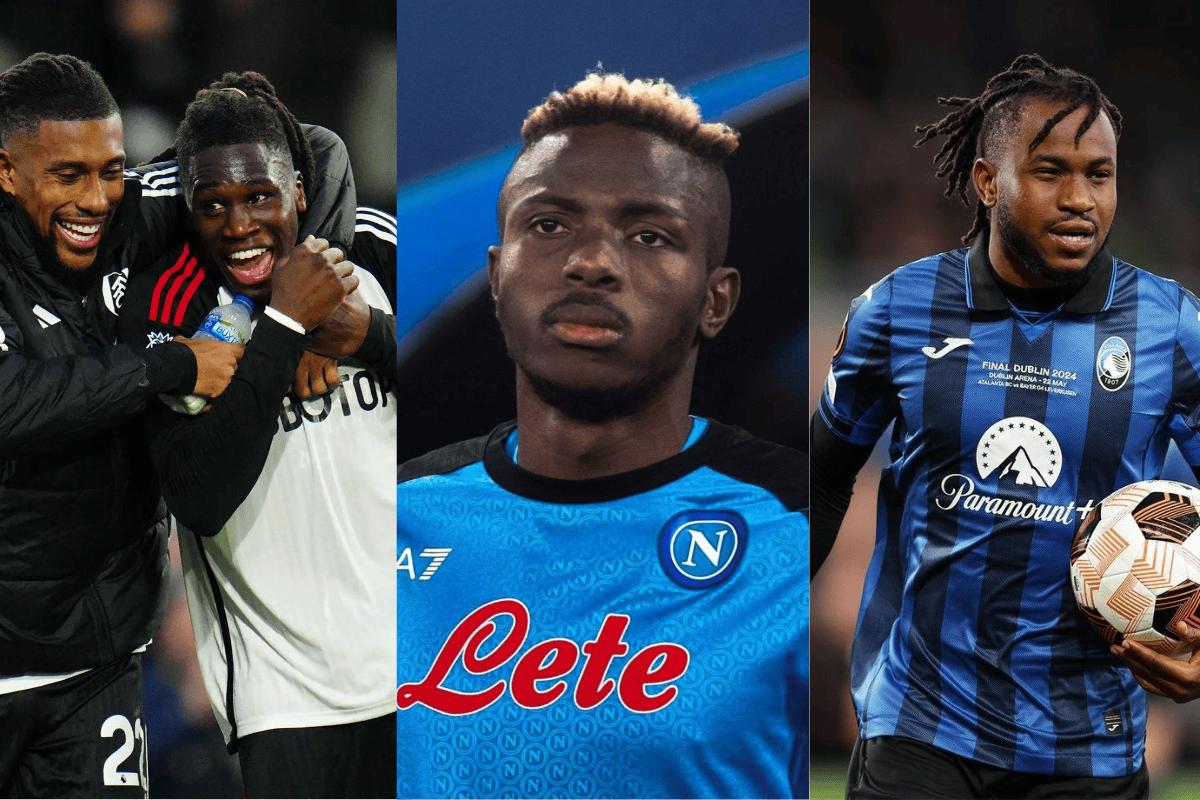
The new European football season is underway, and as usual, clubs spent the summer doing their own shopping. Some of that shopping came with a familiar ritual attached. When Taiwo Awoniyi completed his move to Frank Lampard’s newly promoted Coventry City, the unveiling video showed him standing in front of a Nigerian flag, delivering the line, “Super Eagles don land, it had to be Cov.” Coventry made sure the moment didn’t end there either. Awoniyi was reunited with Frank Onyeka, already at the club after helping them win promotion, and the two Super Eagles were soon appearing together in the club’s content. Nottingham Forest had given Awoniyi a guard of honour on his way out, but Coventry’s welcome was something else entirely: a Nigerian football moment dressed up as a transfer announcement. This happens because Nigerian football fans do not really support clubs. They support people. Put a Nigerian in a shirt and the shirt inherits a whole constituency overnight, whether the club has any real history in Nigeria or not. When a Nigerian is in the squad for a match against Real Madrid or Manchester City, thousands of Nigerians who have never watched that club before will spend ninety minutes believing in it, purely because a Nigerian player is wearing the shirt. It is one of the more peculiar things Nigerian football fandom has produced: a kind of portable allegiance where the club can change, the league can change, even the country can change, but the player remains the point of entry.
A Nigerian footballer, in other words, does not arrive at a foreign club alone. He arrives with an audience. The club may think it has signed a winger or a striker. Its social media team knows better. Somewhere between Lagos, Abuja, London, Manchester, Port Harcourt and Benin City, there are thousands of Nigerians already waiting on the unveiling video, the first training picture, the first goal and, eventually, the first meme. The club posts “welcome, our Naija boy,” and the comments arrive within minutes. A few weeks later the admin is replying to fans in Nigerian slang, the captions carry a Nigerian flag, and the Super Eagles account has been dragged into a routine matchday conversation. It is funny, and it is also calculated. A European club can sit on hundreds of thousands of followers and still struggle to make a training photo feel culturally alive. Put a Nigerian player in that photo, add the flag and a line that sounds familiar to the Nigerian internet, and the comment section turns into a Lagos bus stop. The audience does the distribution work for free, and that is the actual value of a Nigerian footballer in the social media era. He is not just a player the club signed. He is a bridge into an audience the club never had a real reason to reach before.
That mechanism does not switch off once a ball is kicked. As the new season moves into its opening weeks, every tackle won, every assist, every composed ninety minutes from a Nigerian player gets clipped and posted within the hour, and those posts can travel far beyond the club’s usual audience. Clubs have picked up on this quickly enough to understand that there is a difference between posting a Nigerian player and posting a Nigerian player in a way that speaks directly to Nigerians. The latter gets a different kind of reaction. Sometimes it is a flag. Sometimes it is a nickname. Sometimes it is a little Pidgin or slang from the timeline. The trick is not necessarily to make the player the centre of the entire content calendar. It is to know when the Nigerian audience is there and give it something to react to. Fulham’s own coverage has been particularly revealing.
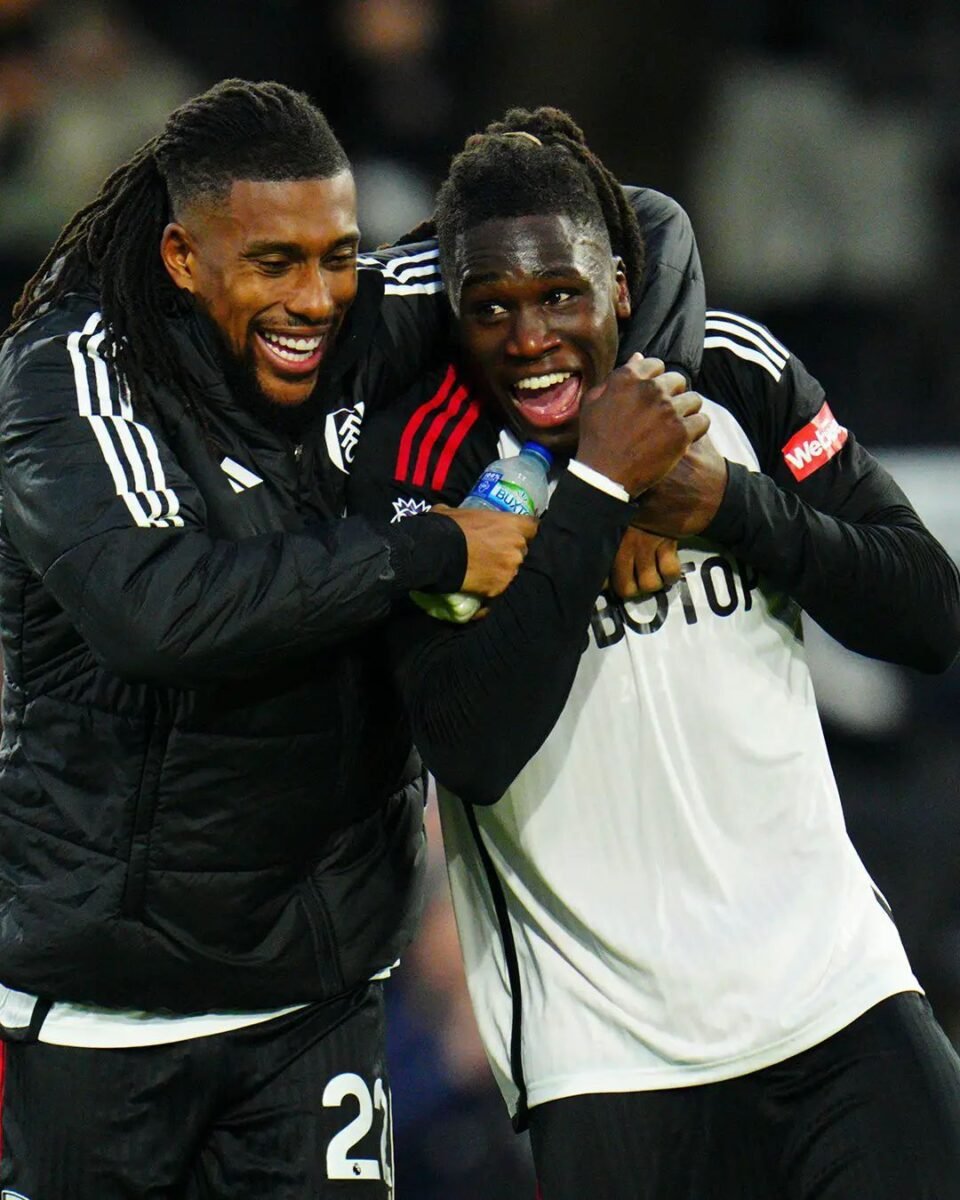 With Alex Iwobi, Calvin Bassey and Samuel Chukwueze together in the squad, the club has repeatedly referred to them as its “Naija boys”, including in its coverage of Nigeria’s AFCON campaign. That is a small thing, but it tells you something about how foreign clubs now communicate with the audiences attached to their Nigerian players. They are not simply saying, “We have three Nigerians.” They understand that the players have become a recognizable unit to a Nigerian audience, and that calling them “Naija boys” is more likely to produce a reaction than another polished corporate graphic. None of this is dishonest exactly. The affection is real on the fan side. What the club is doing is routing attention towards a relationship it did not build, because it knows the relationship converts.
Ademola Lookman shows what that arrangement looks like when it actually delivers. His hat-trick against Bayer Leverkusen gave Atalanta their first European trophy, ending Leverkusen’s 51-game unbeaten run in the 2024 Europa League final and turning Lookman into one of the most important figures in the club’s modern history. Atalanta itself described the final as the pinnacle of his three-and-a-half-year spell when it announced his permanent transfer to Atlético Madrid in February. But the relationship looked very different when Lookman wanted to leave. In August 2025, he accused Atalanta of breaking promises over his departure and skipped pre-season training as he pushed for a move to Inter. The club rejected the bid and maintained that it would not sell him to another Serie A rival. Lookman eventually left for Atlético months later. The point is not that Atalanta was obliged to accept his preferred transfer. It is that the same player who had become inseparable from one of the happiest nights in the club’s history could become a problem once his ambitions and the club’s interests stopped pointing in the same direction.
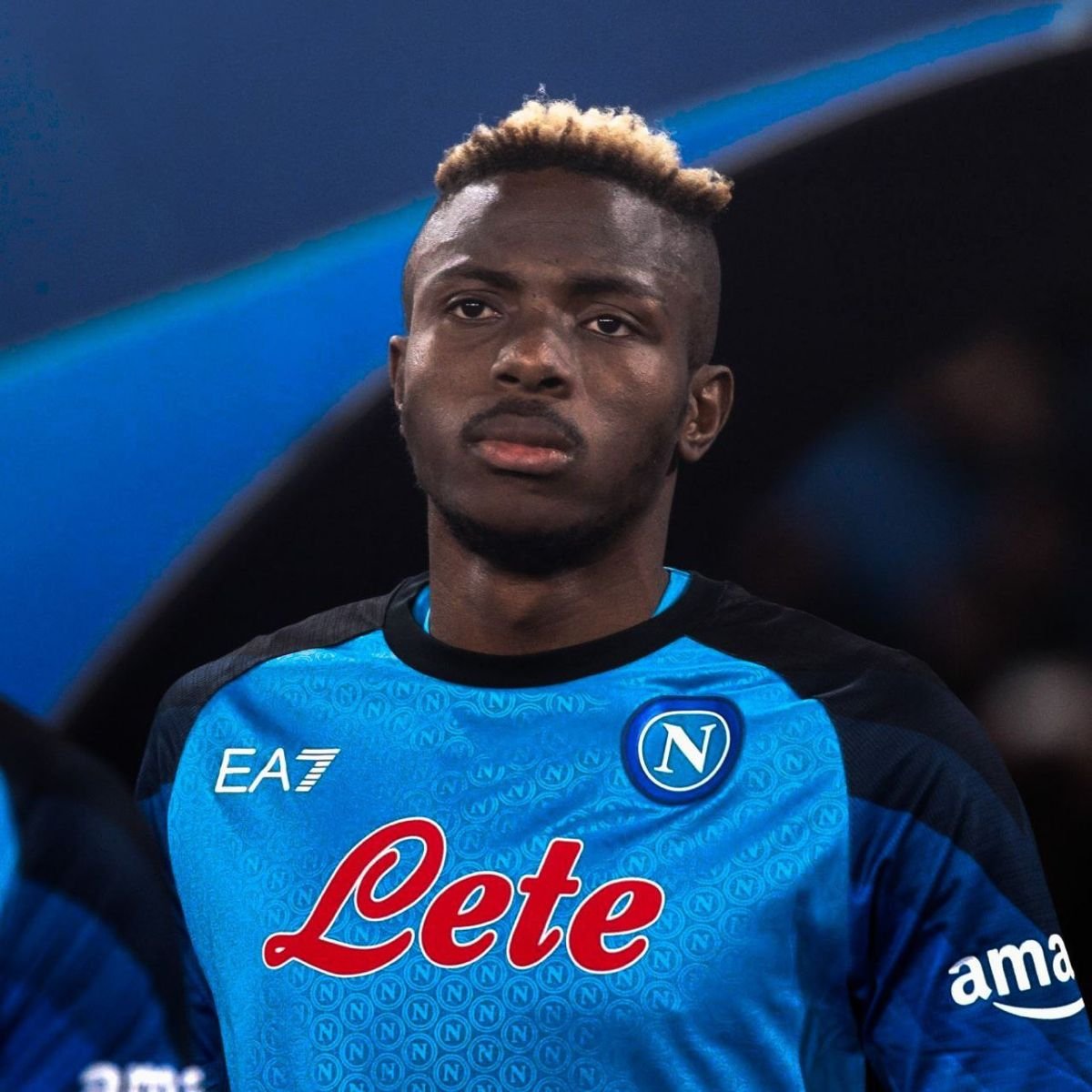
Victor Osimhen’s history with Napoli is the clearest case of a club turning a player into content and then forgetting where the line is. After he missed a penalty against Bologna in 2023, Napoli’s official TikTok account posted a clip of the incident with a mocking voiceover, alongside another video that made fun of him. His agent threatened legal action and Osimhen removed almost all Napoli-related images from his Instagram. The club deleted the video and later insisted it had never intended to offend or mock him, arguing that its TikTok content used an intentionally playful style. The problem was not that Osimhen was above criticism. It was that his own employer had decided that one of his worst moments was also a good opportunity for content. This was a player who had just helped Napoli win its first Scudetto in 33 years and had finished the title-winning season as Serie A’s top scorer with 26 goals. The content machine had celebrated the aura when it was useful. Then, for one bizarre afternoon, it turned the aura into a joke. It is worth saying that none of this is only cynical, because Galatasaray showed the other side of it in March before a Champions League last-16 tie against Liverpool. Supporters at Rams Park unveiled a giant tifo built around Osimhen, his children and his late mother, who died when he was a child, alongside the words, “We are family, and family is everything.” Osimhen was visibly moved to tears as the tribute unfolded, and a teammate had to steady him in the lineup. It was not a social-media department manufacturing an engagement opportunity. It came from the stands, from people who had watched the player week after week and had decided that his story belonged to them too. That is the other side of this relationship, and it matters because it shows why Nigerians follow players into foreign clubs in the first place. The connection is not entirely transactional. Sometimes a club genuinely absorbs a player’s story and gives something meaningful back.
Terem Moffi’s story sits closer to the uglier side of football fandom. After Nice’s sixth consecutive defeat in November 2025, around 400 supporters confronted the squad at the club’s training ground. Moffi and Jérémie Boga were among those physically targeted, and both were subsequently placed on sick leave. Nice condemned the incident, supported the players and described the violence as unacceptable. Moffi spent the second half of last season on loan at Porto before returning to a Nice side that was looking to move him on, and today the exit became official: Hamburger SV announced his permanent signing from Nice on a three-year deal. The point here is not that Nice authorised its supporters’ behaviour, because it did not. It is that the episode showed how quickly a player can move from being a useful member of a team to becoming the face of a frustrated fanbase’s anger, and how little of the affection around football survives once the results turn. Daniel Daga offers the version of this that actually looks like responsibility. When the young Molde midfielder was convicted in Norway over a sexual assault allegation in March, the club suspended him from first-team selection while the legal process continued. Daga maintained his innocence, appealed the conviction and was unanimously acquitted by the Frostating Court of Appeal in July. Molde subsequently made him available for selection again. That is the difference worth naming. Standing by due process is not the same as standing by a player no matter what. A club can take an allegation seriously, remove a player from footballing activity while the courts decide the matter, and still recognise him as a person entitled to the outcome of that process. It is a more responsible model than allowing the court of public opinion, or the social-media machine, to make the decision first.
The strangest proof of how much this aura is worth is how long it outlives the player who built it. Bolton Wanderers still gets Nigerian attention whenever Jay-Jay Okocha’s name comes up, more than a decade after he left. Arsenal’s archive still has Nwankwo Kanu, one of the most recognisable Nigerians of the Premier League era, available as a reliable source of nostalgia and engagement. Everton fans of a certain age will bring up Yakubu Aiyegbeni without being asked. Portsmouth has a similar relationship with Kanu. The players stopped scoring goals for these clubs years ago. The cultural value never really left. Once a Nigerian footballer becomes part of a club’s history, he can remain useful to its digital identity long after his boots have stopped doing the work. None of this argues that Nigerian players are being cynically used with nothing given back. The Galatasaray tifo was real. Fulham’s Nigerian trio genuinely gives the club a relationship with an audience that exists beyond its traditional supporter base. The visibility itself is a resource the players use too, and every name in this piece has turned his profile into some form of leverage at different points in his career. What the aura-farming argument is really about is the asymmetry underneath all that goodwill. A club can benefit enormously from the attention a player generates without necessarily becoming emotionally invested in the person generating it.
The same club that puts a Nigerian flag in a graphic when the goals are coming may not extend the same energy once the run of form dries up, once a transfer request lands on a desk, or once a group of angry supporters decides a player deserves to be confronted rather than simply criticised. Napoli’s TikTok debacle showed how quickly content can cross the line from promotion into humiliation. Lookman’s dispute with Atalanta showed how quickly a club relationship can become a negotiation over leverage. Moffi’s experience at Nice showed what happens when poor results create a climate in which individual players become targets, even though the club itself condemned the abuse. The affection around football tends to follow performance, but the person remains when the performance disappears. So enjoy the unveilings. Enjoy Awoniyi and Onyeka appearing together in a Coventry welcome video, enjoy the tifo Galatasaray’s fans built around Osimhen, enjoy Fulham’s Naija boys jokes and the Nigerian flags that suddenly appear on European timelines. None of it is fake, and all of it is fun. The clubs have simply figured out something Nigerian fans have known for a long time: Nigerian footballers carry people with them. When a Nigerian walks into a foreign dressing room, a little piece of Nigerian football culture walks in with him, and the club’s social-media team has learned that it is worth knowing how to speak to the people standing outside that door. Just don’t mistake that access for loyalty. A club can celebrate a Nigerian player’s goals in Pidgin and still have no intention of standing by him the day the numbers stop working in its favour. Criticise the bad performance. Fine the bad behaviour. Have the hard conversation away from the cameras. Protect the player from his own supporters when protection is necessary. Let due process do its work when the allegations are serious. What no club should do is turn the same machine that farmed his aura into the one that throws him under it. The Nigerian footballer is not your content engine. He is the reason the engine is running.