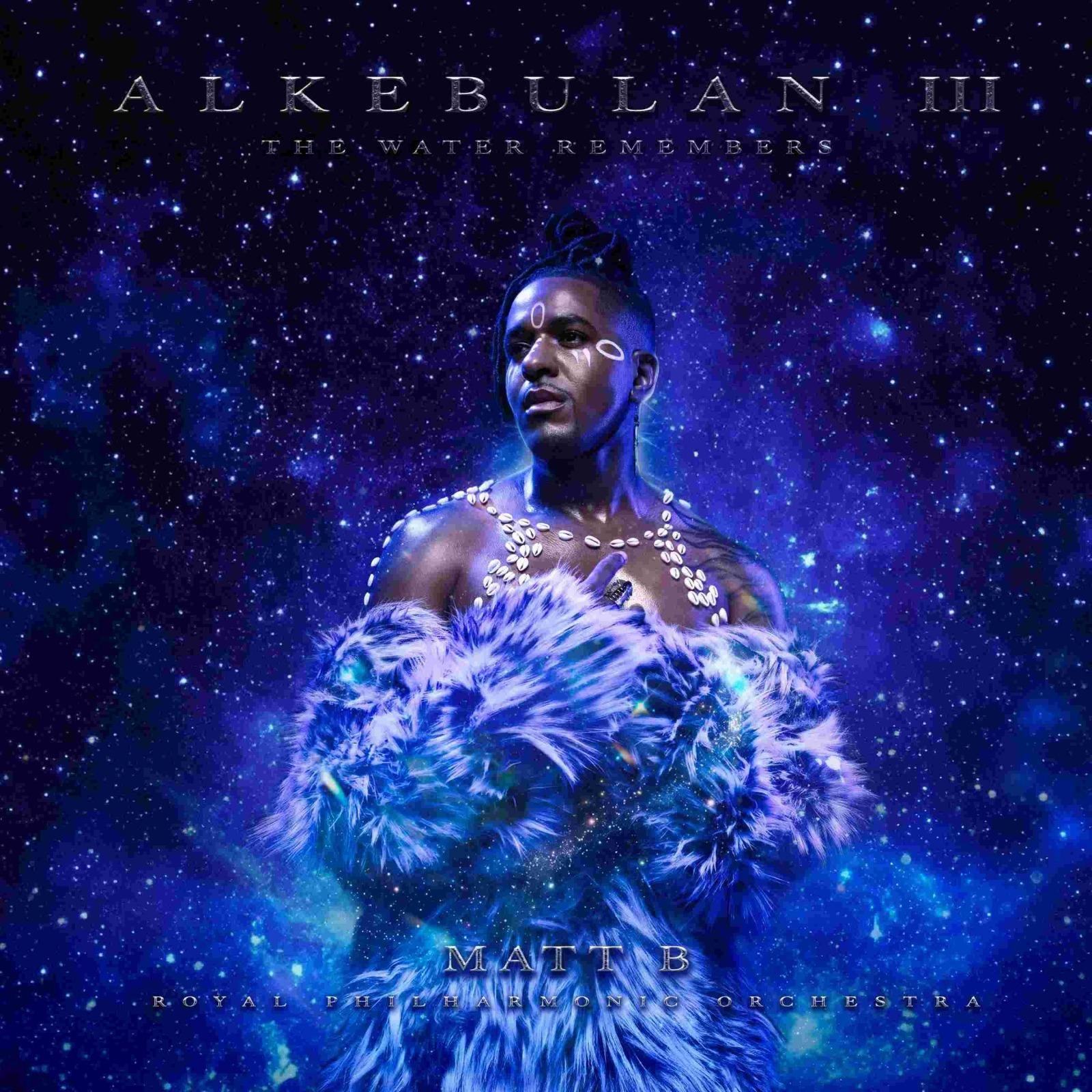
Some albums are made to be heard. ALKEBULAN III: The Water Remembers insists on being witnessed. It arrives not merely as the closing chapter of Matt B’s ancestry-driven trilogy, but as the receipt for a journey the Grammy-winning artiste has spent six years chasing. From an AncestryDNA test in 2019 which confirmed he was Nigerian; through making ALKEBULAN (2023), its Grammy-winning sequel ALKEBULAN II (Best Global Music Album, 2025); to two homecoming ceremonies in Owerri, Imo State, where he was named, titled, and reabsorbed into a lineage he’d only just learned existed.
That ALKEBULAN III: The Water Remembers exists at all, funded independently rather than filtered through a major label’s notion of what an African-American Grammy winner’s diaspora record should sound like, is itself a statement of intent. This was never going to be a tidy, commercially engineered postscript to a Grammy win. It was always going to be a reckoning.
What distinguishes The Water Remembers from the two records preceding it is scale; not just sonically, though the Royal Philharmonic Orchestra’s presence (recorded at Abbey Road) ensures the album rarely settles for restraint, but in ambition. This is a project stretched across three mediums at once: an album, a short film, and a feature documentary, each one carrying weight the others cannot.
Matt B has said as much himself: that some of what happened in his visit to Ghana and Nigeria simply could not survive translation into sound alone, that the visual record exists because a plantation field, a slave river, a door facing the Atlantic, ask to be seen and not only heard. The Water Remembers, then, is not the whole of the story. It is the part of the story that has to be felt. Ten tracks make up that feeling, bookended and threaded through by the Kabusa Oriental Choir, which Matt B has described as the ancestral voice guiding him through the record. They appear at the beginning, resurface at the centre, and close it out. Around that spine sits a carefully assembled cast: Fatoumata Diawara’s near-mythic register, Skales’ effortless swagger, Goya Menor’s grit, Boy Spyce’s flair, and Camidoh’s tenderness — all West Africans, all serving the album’s larger design.
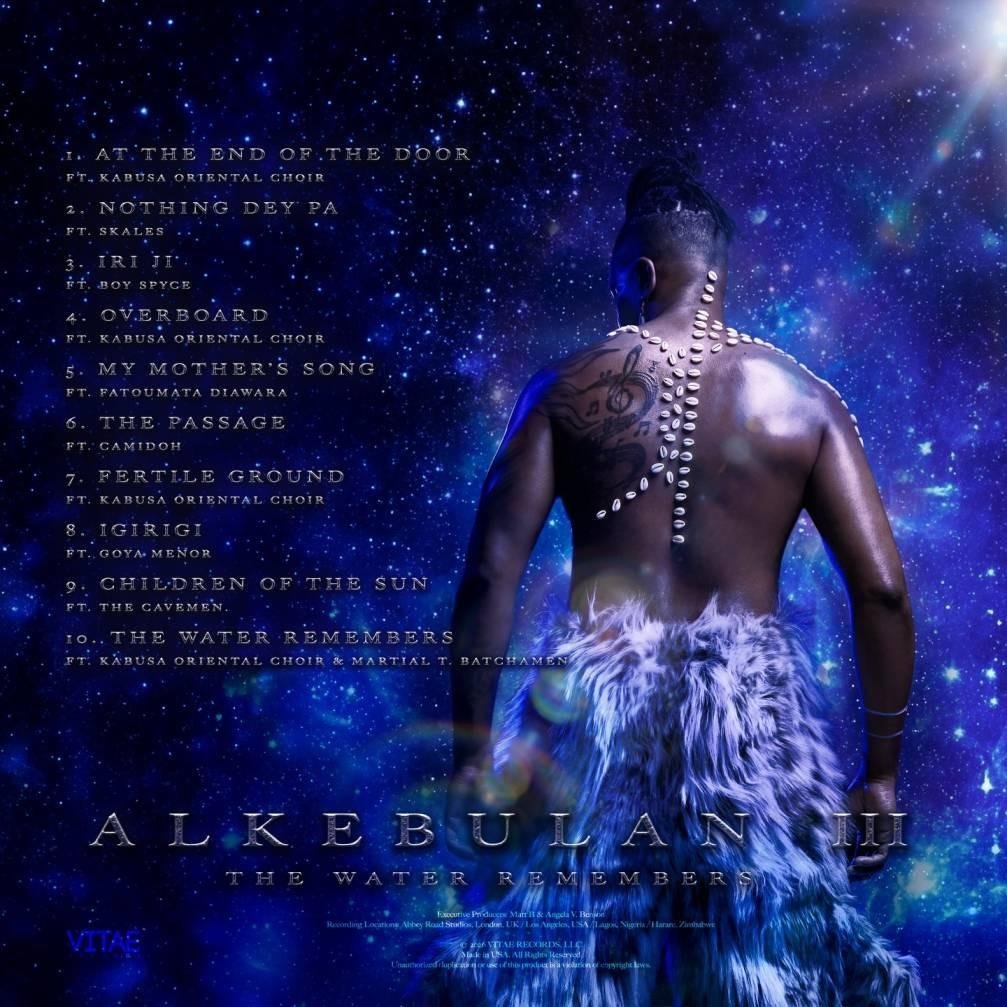 ALKEBULAN III: The Water Remembers opens with soft chords, with kalimbas rippling under Matt B’s hushed, almost prayerful Igbo delivery on “At the End of the Door”. Here, Matt B embodies a sojourner guided by ancient forces back through the metaphorical Door of No Return (the passage through which captive Africans were marched onto ships bound for the Americas) to his ancestral lineage. There’s a cinematic air in the way Kabusa Oriental Choir elevates the sonic atmosphere, with their chants and refrains. When Matt B croons “N’ihi na m nwere ike iburu mgbu a/ N’ihi na m kwadebe ụzọ nye ụmụnna m niile/ N’ihi na m bụ olile/” [For I have the strength to carry this pain / For I prepare a way for all my brothers and sisters / For I am their hope], it carries an air of motivation.
“Nothing Dey Pa” establishes resilience as both a spiritual and personal conviction. Over its groovy production bolstered by Royal Philharmonic Orchestra, Matt B moves between vulnerability and bravado, acknowledging life’s pressures before insisting that “nothing go fit quench my light”. His faith becomes an active form of resistance in “I dey fast and / I dey cast and / I dey bind my demons”, while “Oti lo far” suggests he has moved beyond the struggles that once threatened to dim his light. Afro-Pop icon Skales then slides in with his familiar swagger, matching Matt B’s confidence and adding further dynamism to the song’s narrative.
“Iri Ji” brightens the journey The Water Remembers is trying to tell with a celebratory Highlife groove, using Igbo refrains and vivid imagery to turn movement itself into a philosophy. Matt B repeatedly urges, “Niru niru ojemba/ Ka anyi na ga”, framing progress as the mindset of a warrior, before shifting into the more immediate instruction to “Celebrate yourself/ Come alive / Time dey go / No dey dull”. Boy Spyce holds his own weight, as he remarks on the fleeting nature of life as he pelts: “Chop your life / Drink palm wine / Cos you fit no find / Guarantee for later”. “IRI JI” is an instant earworm as it succinctly melds the vibrancy of Highlife with orchestra arrangement and soft percussion.
Kabusa Oriental Choir appears on “Overboard”, a dramatic departure that pulls the album away from its celebratory momentum and into a haunting meditation on survival. It is framed through the voices of captives who, after seizing control of a vessel, choose to leap overboard rather than continue living in bondage. The song confronts the brutality of the Transatlantic slave trade and the desperate choices it forced upon its victims. When Matt B sings, “Ha gburu eze anyị ka anyị tiri ha egwu” [They killed our king while we sang and danced] and pleads, “Biko egbuna mama/ Biko hapu anyi” [Please, don’t kill mother / Please, leave us alone], the horror becomes painfully intimate.
“My Mother’s Song” featuring Malian vocalist, Fatoumata Diawara, is sonically built around the true story of a little girl kidnapped from Sierra Leone in the 1700s and shipped across the Americas. She only carried a song her mother taught her, which she passed to their descendants. Matt B channels that inherited memory in Igbo, singing, “Ìhè ụzọ dị n’elu igwe/ Na-echeta m gara aga/ Ebe ndụ m bidoro/ Nne gwara m echefula” [Light of the way that’s in heaven/ Reminds me of my past/ Where my life began/ Mama told me don’t forget]. Diawara deepens the song’s sense of remembrance with lines in her native Bambara, connecting two African languages and traditions across generations.
Delicate violins, soft Afro-Pop drums, shakers, and lead guitar plucks usher in “The Passage”, and see Matt B focus on faith, perseverance, and a clearer sense of purpose. He declares: “Put our heart pon the work/ Hustle, no break the law/ Lock in, finish the job”, before acknowledging the burden that accompanies achievement: “Heavy is the head with the crown/ But trust me it no go fall”. Ghanaian singer, Camidoh, matches that confidence with his own declaration of aspiration: “Every little thing I dream/ I must to achieve it”. Together, they turn the song into a buoyant testament to faith-fuelled ambition.
On “Fertile Ground”, Matt B once again teams up with Kabusa Oriental Choir, and reimagines himself with other captives stuck on a plantation. The song turns work into both a site of oppression and a source of inherited strength, with its opening exhortation, “Were ọchị were ọrụ, mmụọ nke ịdị n’otu” [Work as you laugh, that’s the spirit of unity], capturing the captives’ collective resolve. However, beneath that resolve is an awareness of exploitation: “Anyị na-akpọkọ, ha na-erite uru” [We gather and labour, but they are the ones who profit].
Goya Menor appears on “IGIRIGI”, providing high-octane energy to a track built around freedom and African cultural pride. The production keeps the momentum high, with pulsing drums, layered percussion, tremolo strings and rhythm guitars creating one of the album’s most infectious grooves. Matt B remains as confident as he sings in Pidgin English: “Give me space/ Heavy weight/ Born to reign/ Me I want to live my life/ I no send anybody give me space”. Menor’s ad-libs make this rhythm-driven composition worthwhile.
“Children of the Sun” finds Matt B looking at survival from the other side of struggle. The opening is almost a roll call of the different ways people navigate life: “Many don go cos many don fight/ Many won live, but many don kpai”. Yet, rather than dwelling on absence, the song turns towards what remains, repeatedly declaring, “Life is a blessing o/ And if you don’t know then now you know”. The Cavemen and a children’s choir add a communal quality to that affirmation, making the song feel like a collective celebration.
Alkebulan III: The Water Remembers closes with its title track, featuring Kabusa Oriental Choir and Martial T. Batchamen, and brings the album’s ideas of ancestry, displacement and remembrance into a single, expansive statement. It opens with spoken-word poetry delivered through the voice of a male narrator who embodies water as an ancient witness, reflecting on creation and the passage of time. Matt B and the choir gradually enter this world of memory, their voices surrounded by enveloping strings and woodwinds.
The water’s testimony becomes increasingly historical as it recalls people crossing the Atlantic, carrying identities that were violently taken from them: “Bearing songs and names that were stripped away”. Yet the speaker refuses to leave its subjects defined by suffering. “Yet, they endured/ I have never lost sight of them/ I have never forgotten them” becomes its quiet declaration of survival. The song ends on a bright note: “Do not diminish them/ For I remember who they are/ And I remember who I made them to be”.
What holds The Water Remembers together, ultimately, isn’t its subject matter but its craft. The Royal Philharmonic Orchestra is the album’s connective thread, present in every track, even as different genres are explored without feeling disjointed. In fact, it is what allows Matt B to sound like he’s telling one story despite exploring diverse narratives. The Kabusa Oriental Choir performs a similar function vocally, opening the album, appearing at some of its most emotionally charged moments and returning for its final reckoning. Even the features feel deliberately chosen rather than ornamental, with each artist bringing a distinct voice that expands the album’s sense of place without pulling it away from its central narrative.
More importantly, ALKEBULAN III: The Water Remembers completes the trilogy with a sense of purpose that makes the preceding albums feel like stages in a much larger journey. As such, Matt B does not treat ancestry as a destination he has simply arrived at. He treats it as something living; something that can be questioned, mourned, celebrated, and continually rediscovered.
That approach also reveals the breadth of Matt B’s artistry. He is not borrowing African sounds to contextualise a diasporic identity but constructing an expansive musical language in which R&B, Hip-Hop, Afrobeats, Highlife, traditional Igbo music and Western orchestration can speak to one another. One can easily surmise that his willingness to allow orchestras and choirs to occupy much space in the music and tell stories in an unconventional manner points to an artiste that is uninterested in boxing himself.
There may be moments when Matt B’s decision to sing extensively in Igbo feels slightly unfamiliar. His pronunciation and phrasing can occasionally sound like those of someone still finding his way around a language that is culturally his but not one he grew up speaking. Yet, that imperfection ultimately becomes part of the record’s emotional honesty. The Water Remembers is not the work of an artiste pretending he has always belonged to this world; it is the sound of someone learning to belong to it. The willingness to sing in Igbo, despite the inevitable limitations, makes the album’s pursuit of identity feel lived rather than performative.
The Water Remembers does not leave Matt B at the end of his story, but at the point where the question changes. Having spent six years tracing where he comes from, the more intriguing question now is what he does with everything he has found. The trilogy has given him a lineage to explore, a cultural vocabulary to deepen and a body of work through which to preserve what might otherwise be forgotten.
Whatever comes next does not need to be another search for identity. Matt B found the door, walked through it, and listened to what was waiting on the other side. Now, he gets to decide where the journey leads.
Rating: 8/10
Emmanuel “Waziri” Okoro is a Nigerian writer and journo with an insatiable knack for music and pop culture, with bylines on Afrocritik, PM News, Tribune, The Sun, ThisDay, Vanguard, and The Guardian. When he’s not writing, you will find him arguing why Arsenal FC is the best football club in the multiverse. Connect with him on Twitter, Instagram, and Threads: @BughiLorde.