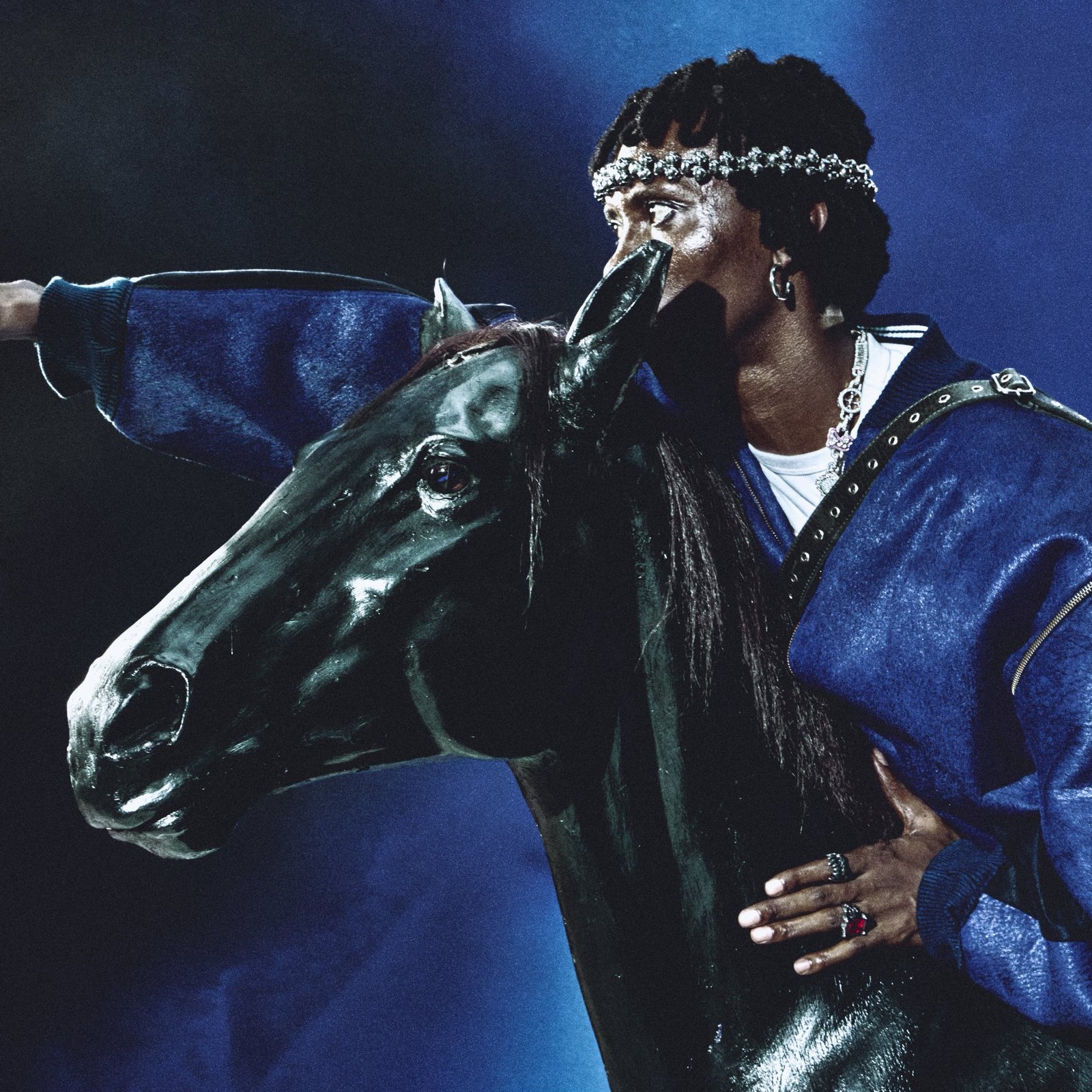
There is something fascinating about watching an artist discover new possibilities within his craft. The willingness to abandon familiar territory, absorb influences from beyond one’s immediate environment and experiment with unfamiliar sounds is often what separates artistic longevity from creative stagnation. For Blaqbonez, whose career has been defined by an unusual balance of technical rap ability, irreverent personality and an increasingly sophisticated understanding of contemporary African pop, NOMADINHO: 4TH PRIME arrives at an especially interesting moment. Following a run of records that has strengthened his commercial position, the 15-track album finds him operating with the confidence of an artist who understands his audience, knows his strengths and is willing to explore what lies beyond them.
There is a noticeable ease to the music. The production is colourful, the melodies are accessible, and Blaqbonez appears increasingly comfortable navigating the space between hip-hop and contemporary afrobeats. His growing affiliation with UG’s exciting music scene introduces another dimension to his sound, while the familiar themes of money, romance, pleasure and personal success provide a recognisable framework for the project. The opening stretch provides a convincing argument for the album’s direction. I LOVE THIS, featuring Igwe Aka, is an especially effective introduction to the world Blaqbonez intends to inhabit. An Igbo flute establishes the song’s sonic identity, while Igwe Aka’s remarkable cadence introduces a sense of movement and cultural specificity. The instrumental’s melodic contours evoke the haunting resonance of the Chinese erhu. The transition into C$sh Everyday is equally persuasive. Built around P-Prime’s immaculate production, the record finds Blaqbonez operating with the kind of ease that makes his strongest Hip hop-oriented performances so effective. That same understanding of accessibility carries into Big Performer, Chanel and Ikebe 3000, featuring Asake. These previously released records reinforce the album’s commercial identity. Blaqbonez sounds assured, the music moves with purpose, and the records understand precisely what they are designed to accomplish, commercial success.
Blaqbonez’s engagement with the UG Scene is one of the more compelling aspects of his recent artistic evolution. His willingness to embrace a musical community beyond Nigeria’s mainstream ecosystem suggests an understanding of positioning. On Mazza, Dancia and C$sh Out, this influence becomes especially apparent. The inflected vocals, buoyant flows and melodic performances reveal an artist actively adapting to the rhythmic and vocal sensibilities of a different musical environment. Rather than merely attaching himself to a passing trend, Blaqbonez appears interested in inhabiting the sound, allowing its melodic instincts and rhythmic bounce to influence his performance. The result is a whole lot of music that feels different from the material that established his reputation, which offers a glimpse of what happens when an artist becomes curious about the possibilities beyond his established identity.
However, musical reinvention is a delicate exercise. It requires an artist to absorb new influences without losing the qualities that make his perspective distinctive. As the melodic performances become more central, Blaqbonez’s lyricism increasingly feels secondary to the music surrounding it. His vocal execution remains engaging, and the records possess an undeniable rhythmic appeal, but the writing does not always demonstrate the same level of imagination. For an artist whose identity has long been one of the faces of African hip-hop, this is crucial, Rap is exclusively defined by lyrical complexity, and more so valued as a demonstration of technical ability. So when an established rapper moves towards a more melodic sound, the most rewarding transformation occurs when the new approach expands his expressive range. Yahooze, featuring Victony, offers a different kind of satisfaction. Rather than relying on sheer rhythmic momentum, the song invites the listener into a more immersive atmosphere. Its measured tempo, subtle drums and shakers, and trumpets drifting through the background create a soundscape that seems to unfold in slow motion. The arrangement has a hypnotic quality, allowing the record to settle into its own rhythm instead of constantly demanding attention. Victony’s chorus is the song’s defining moment. His delivery is effortless yet expressive, giving the record a melodic centre that feels both immediate and enduring. Blaqbonez, in turn, benefits from the atmosphere, allowing the production to dictate the pace of his performance. It is the sort of record that makes a listener appreciate the album’s musical instincts, while also raising expectations for what those instincts might achieve when paired with more ambitious writing. Those expectations find a more personal expression on Like 2021. Here, Blaqbonez looks backwards, reflecting on the hardship that preceded his present circumstances and contrasting those experiences with the comfortable life he now enjoys. He also reiterates his conviction that he remains ahead of the curve, delivering his assertions with the confidence of someone who believes he has earned his place.
For a moment, the album’s title acquires a more convincing meaning. The idea of a fourth prime suggests an artist who has accumulated enough experience to understand his craft differently, someone capable of drawing on previous versions of himself while discovering new possibilities. On Like 2021, his confidence feels grounded in experience, and his delivery carries the conviction of someone who can recognise how far he has travelled but that didn’t last for too long as the album subsequently gets into its sensual territory on Justina, a slow-tempo record built around Blaqbonez’s determination to win a woman’s affection and his fixation on her physical appeal. Sample Ekwe offers another moment of cultural familiarity. By incorporating the classic Sample Ekwe into a contemporary setting, Blaqbonez draws on a recognisable piece of musical memory while making the act of sampling part of the record’s identity. There is an immediate appeal in hearing a familiar reference recontextualised, particularly when the source material carries its own history and cultural associations.
The final stretch, comprising Jonzing and Finesse You, brings the album towards its conclusion. While Jonzing maintains the project’s accessible pop sensibility, Finesse You, featuring TML Vibez, provides a more satisfying culmination. The latter reveals a side of Blaqbonez that feels frustratingly underexplored throughout the album. His writing is more engaging, his flow occupies the instrumental with greater precision, and the relationship between his technical ability and the record’s musicality feels more deliberate. TML Vibez is equally important to the song’s success. His verse introduces a compelling dynamism, demonstrating a strong command of phrasing, rhythmic placement and lyrical construction., he contributes a performance that raises the quality of the record as a whole. The record is undoubtedly one of the album’s most convincing demonstrations of what Blaqbonez can achieve when his strengths converge. The writing is more purposeful, the execution more assured, and the musical arrangement provides room for both performers to express themselves without diminishing the record’s accessibility. And therein lies the frustration of NOMADINHO: 4TH PRIME. Its closing moments suggest a more complete version of the album than the preceding tracks consistently deliver.
Taken together, the 15 tracks reveal an artist with considerable musical adaptability, a strong instinct for production and an increasingly expansive understanding of African Hiphop in 2026. The album’s best moments are genuinely enjoyable, and its engagement with the UG music scene is a welcome example of artistic curiosity. But this does not automatically make it a strong album. A prime should represent a convergence of experience, ability and artistic purpose. It should be a period in which an artist understands his strengths well enough to take greater creative risks, allowing maturity to produce something more nuanced than confidence alone. Commercial success can confirm that an artist understands his audience, but artistic fulfilment demands something more difficult: the willingness to challenge that understanding, to interrogate familiar themes and to discover new ways of expressing them. Blaqbonez is clearly in a position to do this. His performance on Like 2021 demonstrates the value of connecting personal history to present circumstances, while Finesse You shows that lyrical precision can coexist with the contemporary sounds he is exploring. It is a good album that never quite becomes a great one. It sounds adventurous in its musical influences without consistently extending that adventurousness to its technicality.Blaqbonez has reached a point where he can make music that travels, collaborate across different musical environments and approach new sounds without appearing out of place. The next step is to ensure that this versatility serves a more distinctive artistic vision. He has demonstrated that he can adapt his sound to the moment but this album feels like an unfinished proposition, with enough quality to sustain interest, enough inconsistency to limit its impact, and enough flashes of brilliance to make its shortcomings difficult to dismiss.
Lyricism – 5/10
Production/Sound Engineering – 8/10
Tracklisting/Sequencing – 6/10
Vocals, Delivery & Execution – 7/10
Listening Experience – 6/10
Overall rating – 6.4/10