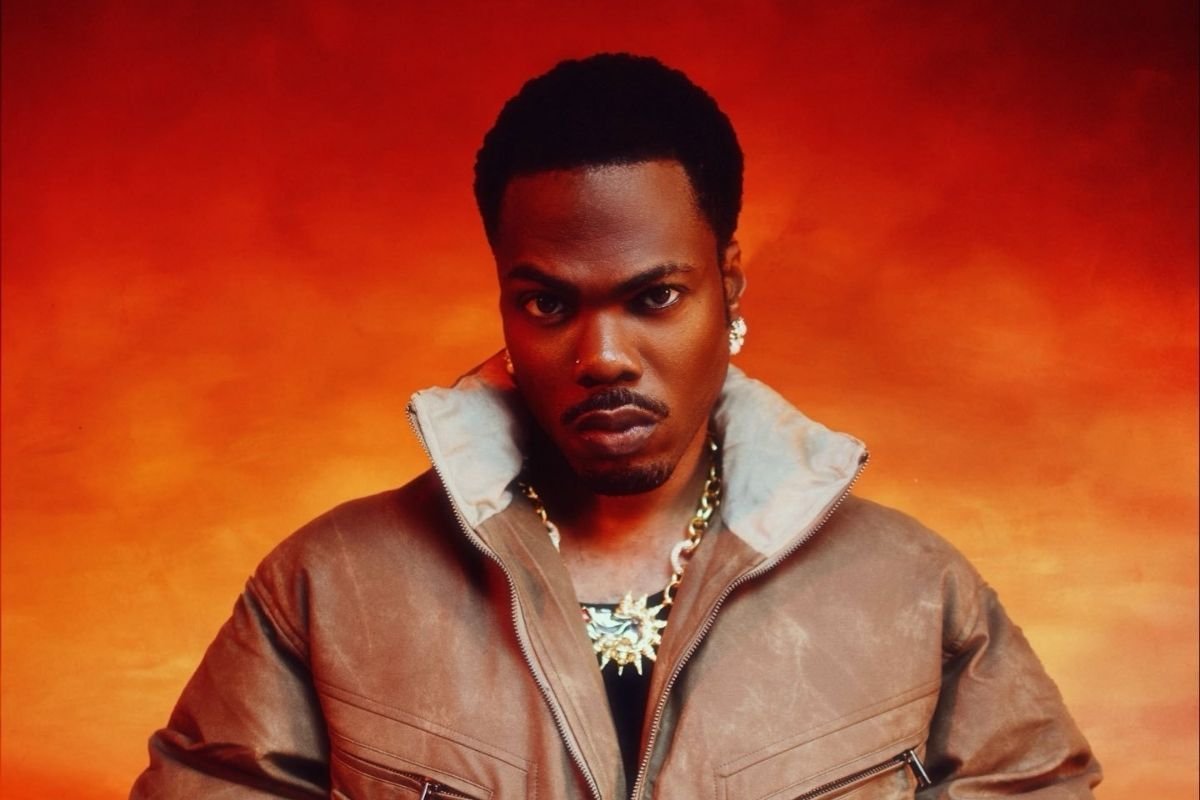
For years, Ckay has been the poster boy for Emo-Afrobeats: the lovesick romantic, the melancholic crooner, the man who could turn heartbreak and love into music. But on Banger Boy, the ex lover-boy has seemingly been seduced by the power of rhythm and, perhaps, the eternal mystery of a good waist. Following the success of “Body” with Mavo, one of the undisputed hits of 2025, Ckay has embraced a faster, more physical sound. His third album arrives as a test of how far this new instinct can carry him. Can the man who once made seductive sounds become a convincing architect of the party?
The answer begins with “NDA,” an intro that announces this new Ckay with guitar strings and heavy kicks. He is reckless here, admitting that he is willing to put himself at risk for the intoxicating shape of a woman. There is still pain underneath the bravado, but it is now competing with lust, rhythm and a growing appetite for excess.Then comes “Body” with Mavo, the album’s gravitational centre and the record that truly ignited this new chapter. Its infectious energy establishes the party wave that Banger Boy spends much of its runtime chasing. “African Girls” featuring Kidd Carder follows with a mara-infused groove, cleverly reinventing the energy of its predecessor without allowing the momentum to drop. Ckay understands the assignment: keep the listener moving, keep the pulse alive. Shege” continues the campaign. Synths, funk and Amapiano collide as Ckay doubles down on the same thematic universe. At this point, it becomes difficult not to wonder whether we have officially lost the leader of Emo-Afrobeats to the ancient and understandable power of yansh. The heartbreak is still somewhere in the building; the waist has just simply taken over the microphone.
Electric guitars return on “Badaminton,” one of the album’s most structurally satisfying records. Ckay presents himself as a sinner and asks for forgiveness, even as he confesses that the temptation standing before him may be too compelling to resist. There is humour in the contradiction, but also something characteristically Ckay about it: desire, guilt and vulnerability occupying the same room. “Para” featuring Phyno offers a more interesting glimpse into the tension between old and new Ckay. His verse carries traces of the familiar Ckay, the restrained, melodic songwriter listeners have always known while the pre-chorus and chorus lean fully into his newly discovered energetic persona. It is an effective hybrid, good enough to hold your attention until the final note, even if it may not necessarily pull you back for another listen. Unfortunately, the album begins to lose some of its colour around “PPOWER” and “Raba.” The problem is not that either song is particularly offensive; it is that they feel trapped within the same sonic lane. After establishing such a clear new identity, Ckay rarely pauses to challenge it. The production begins to blur, the ideas feel less adventurous.
Then, almost like someone remembered why we fell in love with Ckay in the first place, “sexy” featuring Maleek Berry and “Zero” featuring King Promise pull him back into his emotional bag. Mid-tempo, R&B-leaning and vocally expressive, these songs restore some of the dimensionality missing from the album’s more relentless moments. Ckay’s vocal dexterity shines here, particularly in the way he uses layered background vocals to create atmosphere. The transition into “E Clear” is especially effective, making this final stretch one of the album’s most satisfying passages. For fans who came for the emotional core of Ckay, this is the reminder that the old lover boy has not disappeared completely. Bye Bye,” the outro, closes the album by returning to heartbreak. Ckay reflects on a toxic relationship, the necessity of letting her go, and the strange permanence of memories even after the relationship itself has ended. It is a fitting conclusion: after spending much of the album chasing bodies, rhythm and pleasure, Ckay eventually finds himself back where he started—with the ghosts of love.
Ckay obviously wants hits records, but that’s not a problem. In fact, that ambition is perfectly reasonable. After the success of “Body,” it is understandable that he would want to bottle whatever made the record work and pour it into an album. The problem is that he seems to have mistaken the formula for the feeling. There is an almost scientific logic to the way Banger Boy approaches its high-tempo records: “Body” worked, so make more records that move like “Body.” But the lesson Ckay should have taken from the song is not that every hit needs to sound like “Body.” It is that he has discovered another side of his artistry, one capable of producing fast, physical, immediate records without abandoning his instincts as a songwriter. There is a difference between building around a successful sound and reproducing it. Banger Boy occasionally struggles to understand that difference. Ckay has more than enough musical ability to make high-tempo records that do not rely on the same rhythmic blueprint. He could have explored different tempos, percussion patterns, structures, vocal arrangements and melodic ideas while maintaining the kinetic energy he clearly wants. His writing was very subpar on this project, and as much as there is nothing inherently wrong with writing about women, sex, attraction or physical desire. Those subjects have always been part of popular music, and Ckay’s playful treatment of them can be genuinely entertaining. The issue is that he often reaches for the most obvious version of those ideas without giving them enough lyrical imagination, they are simply not as inventive as Ckay is capable of being. This is particularly frustrating because the latter part of Banger Boy provides the evidence that he can do better, as soon as the tempo drops, Ckay’s pen began to reveal itself again. His voice became capable of carrying complicated emotions. His use of harmonies and background vocals becomes more deliberate, while his melodic instincts arguably one of his greatest strengths come back into focus. These songs are important because they complicate the narrative that Ckay needs to abandon his old self. He doesn’t. The Emo-Afrobeats Ckay is not a creative dead end. If anything, it remains the most distinctive part of his artistic identity. The vulnerability, unusual melodies, romantic melancholy and vocal layering that once separated him from his peers are still there. The challenge is figuring out how to place that emotional intelligence inside the new, faster world he is trying to build.
Lyricism: 1.2
Production/Sound Engineering: 1.4
Tracklisting/Sequencing: 1.2
Vocals, Delivery & Execution: 1.4
Listening Experience: 1.3
Overall Rating = 6.5