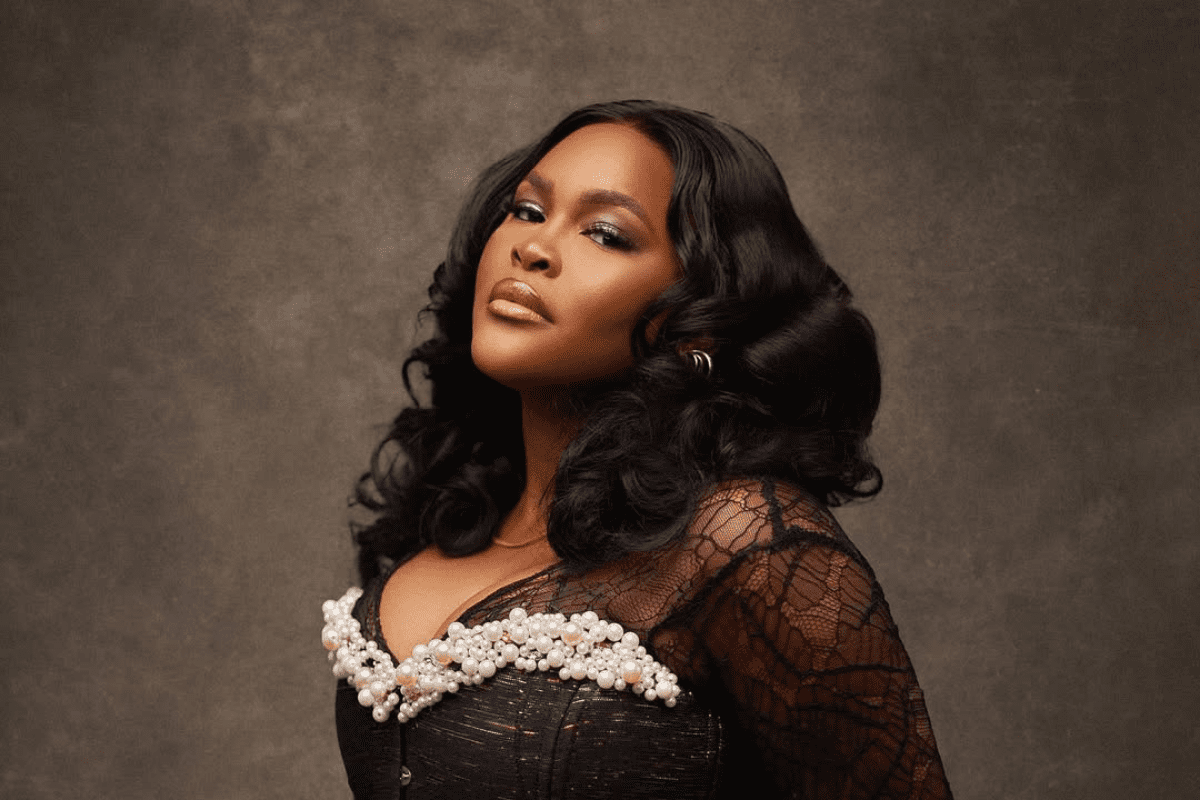
For over a decade, Evi Odafe-Ejumedia has quietly built a career behind some of African entertainment’s most influential media platforms and cultural moments. As Channels Head at Africa Magic, her work sits at the intersection of storytelling, business, and cultural impact shaping how millions of Africans experience television, film, and live entertainment. From her early years in broadcast production to overseeing one of the continent’s most powerful entertainment brands, she has become part of the generation redefining the future of African media.
In our latest Offstage Feature, she speaks about leadership, the responsibility of African storytelling, and the evolution of the industry beyond television.
Can you give us a brief introduction of who Evi Odafe-Ejumedia is, your background, passion and what originally drew you to media and entertainment administration.
I am a broadcast media professional with over a decade of experience spanning television, radio, production, and entertainment administration. I hold a Bachelor of Science in Psychology from the University of Lagos, which I believe gave me a unique foundation understanding human behaviour has always informed how I think about audiences, storytelling, and team leadership. I went on to earn an MBA from the University of Birmingham, complementing my creative instincts with strong business acumen.
My career began in content production, working across platforms like Hip TV, Cool FM, and Consolidate Media, before progressing through senior roles at ViacomCBS Africa, now Paramount Africa, where I led production on landmark events like the NickFEST, Trophy Extra Special Band, Africa Day Benefit Concert and many more. Today, I serve as Channels Head for Africa Magic at MultiChoice Group, where I oversee channel strategy, content acquisition, and brand development.
What originally drew me to this industry was the power of storytelling. Media is one of the few spaces where culture, commerce, and human connection intersect daily. I wanted to be in the room where those decisions are made and eventually, I wanted to be the one shaping them.
Leadership roles in entertainment often require balancing creativity with business. How did you learn to navigate both worlds?
Honestly, I learned by doing and sometimes by getting it wrong first. Early in my career, I was immersed in the creative side: producing shows, developing concepts, managing sets. But I quickly realised that brilliant ideas without financial discipline or strategic clarity rarely survive in this industry. That realization pushed me to invest in my business education deliberately from obtaining my Project Management Professional certification and Certified Scrum Master qualification to completing the Organisational Leadership programme at Harvard Business School Online, and ultimately pursuing my MBA at the University of Birmingham.
What I have come to understand is that creativity and commerce are not in opposition, they are interdependent. A well-resourced creative vision delivers better outcomes for audiences and for the business. At Africa Magic, for instance, we achieved a 400% increase in audience and revenue, not because we chose one over the other, but because we were disciplined about how we deployed creativity at scale.
My approach is always to lead with the audience in mind and anchor every decision in data and strategic intent. That discipline is what turns creative energy into lasting impact.
What has been the most personally challenging part of your rise within the industry?
The most challenging aspect has been learning to hold space for myself in rooms that were not always designed with someone like me in mind. The media and entertainment industry, particularly at a leadership level, can be quite demanding in how it tests your conviction and your confidence, especially as a woman navigating a sector where leadership often looks a certain way.
There were moments early in my career when I had to work significantly harder to have my ideas taken seriously or to be seen as a strategist rather than simply an executor. What kept me grounded was a commitment to excellence and a willingness to continually invest in my own growth, whether that was through formal qualifications, mentorship, or simply staying curious.
I also think the breadth of my experience moving from production to administration to channel strategy meant I was sometimes building the blueprint as I went. There was no single clear path to follow. But in retrospect, that is also what has made my perspective valuable. I understand this industry from the ground up.
Many people see Africa Magic as just a TV platform, but internally it functions almost like a cultural institution. How do you personally define its responsibility to African storytelling? And at what point did you realize the AMVCA had become bigger than television?
Africa Magic carries a responsibility that goes far beyond entertainment. When you are the primary platform through which millions of Africans see themselves reflected on screen, their languages, their family dynamics, their humour, their grief, you are, in a very real sense, holding a mirror up to the continent. That is not a responsibility we take lightly.
Our obligation is to amplify African stories in their full complexity; not to sanitize or simplify them for external consumption, but to honour their authenticity. That means investing in local talent, supporting independent filmmakers, and ensuring our content library represents the diversity of African experiences, not just the most commercially convenient ones.
As for the AMVCA, I think the moment it transcended television was when audiences stopped watching it and started participating in it. When people are debating nominees weeks before the ceremony, when fashion choices from the red carpet become national conversations, when diaspora audiences are streaming it live from four continents, that is no longer just an awards show. AMVCA10 generated over 200 million global impressions. That figure tells you everything. It has become a cultural moment, a celebration of African excellence that the continent claims as its own.
This year especially, social media conversations compared the AMVCA red carpet to the Met Gala, with many saying African fashion felt more daring and artistic. How did you interpret those comparisons?
I interpret those comparisons as an affirmation of something we have always known internally, that African creativity is world-class and deserves a world-class stage. The fact that global audiences are now drawing that parallel speaks to the calibre of our designers, our stylists, and the confidence of the talents who walk that carpet. What I find particularly powerful is that the AMVCA red carpet is not derivative of Western fashion moments; it is distinctly, unapologetically African. The fabrics, the silhouettes, the cultural references woven into each look, these are not imitations. They are originals. And I think audiences around the world are recognising that. For us as a platform, it reinforces the importance of elevation. When we invest in production quality, in curation, in the overall experience of the event, we create the conditions for that kind of creative expression to flourish. The red carpet does not happen in isolation, it reflects the ambition of the institution behind it.
What legacy do you hope your leadership at Africa Magic eventually leaves behind?
I hope the legacy is one of intentionality, that under this period of leadership, Africa Magic became even more deliberate about whose stories it told and how it told them. That we created more opportunities for emerging African talent, that we raised the bar for production standards across the continent, and that we used our platform to demonstrate that African content is not just locally relevant but globally compelling. On a personal level, I hope I leave behind a proof of concept that a woman who started her career producing music content for radio and television could ascend to lead one of Africa’s most iconic entertainment brands, and do so with rigour, creativity, and integrity. If that trajectory inspires even one person coming up behind me to believe that the executive chair is within reach, then that matters as much to me as any commercial milestone. Legacy, ultimately, is not what you accumulate, it is what you make possible for others.