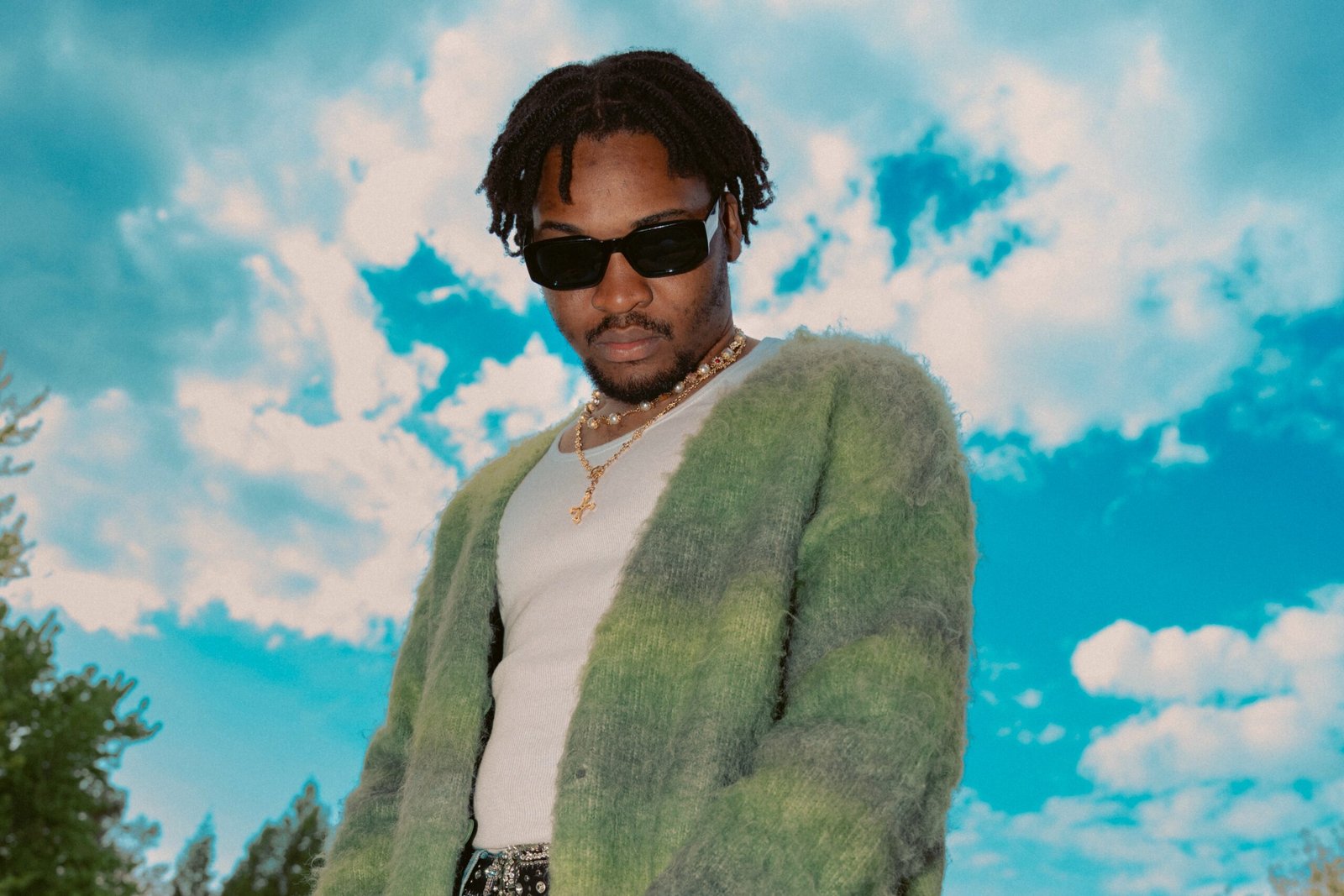

Rooky Kamiz has been steadily carving out his own space within Canada’s Afrofusion scene. Born in Nigeria and now based in Canada, the artist has built a sound rooted in Afrobeats while blending in unexpected influences and bold rhythms. His music reflects an instinctive approach led by rhythm, feel, and a willingness to explore beyond.
With his upcoming project “Of Chaos & Cotton Candy, Rooky Kamiz steps further into his world offering a body of work shaped by contrast, growth, and creative freedom. DigiMillennials caught up with the artist to talk about his journey, making music across borders, and what’s next.
I know you’re currently based in Canada, but can you share your journey moving from Nigeria to Canada and how that transition shaped you personally and musically?
I moved to Canada in 2019. Before that, I was in Nigeria and came here for school. Now I’m working full-time. I did music a bit before I moved around 2018 but I kind of stopped when I relocated. It wasn’t until COVID, when everything slowed down, that I picked up music again. Since then, it’s been a continuous journey.
The two environments are very different. How has adapting to Canada influenced your sound and creative process?
Honestly, I’d say I’m still adapting. I spent most of my formative years in Nigeria, so that foundation is very strong. Musically, the transition itself wasn’t too difficult because I’d always listened to foreign music even while growing up in Nigeria. The bigger challenge was making my music relatable to people here, especially introducing Afrobeats to audiences who didn’t fully understand the sound yet. Thankfully, movements like Afrobeats to the World helped, but there was still a gap.
What I’ve tried to do is build a bridge. I incorporate elements from genres people here are more familiar with. For example, I love performing with a live band. That’s something audiences here really connect with. I also write in both English and Pidgin English. English helps the wider audience relate, while Pidgin is for my people, it carries certain slang and emotion that only we fully understand. As I continue living in Canada and learning more, I keep blending those experiences into my sound.
Your project “Of Chaos & Cotton Candy” is such an interesting title. Can you share the inspiration behind it?
The title came from real-life experiences. I was experiencing the highest highs of my music career while also going through one of the lowest points in my personal life. I lost a close family member, and it was my first time truly experiencing grief while being deeply involved in a major creative project.
At the same time, my career was gaining momentum—I won Afropop Artist of the Year and Artist of the Year at the Western Canadian Music Awards. Everything looked great on the surface, but internally I was dealing with loss. That contrast inspired the title. “Candy” represents how sweet life can be exciting and joyful but it doesn’t last forever. It melts quickly. And then there’s chaos. Life exists in that duality, and that’s what the project captures.
My condolences for your loss. When people listen to “Of Chaos & Cotton Candy”, what do you hope they take away from it?
Thank you. Honestly, I’m curious to know what people take from it. I’ve recently adopted this philosophy that I’m just a conduit for the music. I know why I wrote certain songs, but I also believe that sometimes a message passes through the artist and listeners receive what they need.Of course, I hope people enjoy it. I poured my blood, sweat, and soul into the project. But beyond that, I trust that everyone will take away whatever message resonates with them personally.
Can you walk us through your creative process from the spark of an idea to a finished song?
It really depends on the song. I’ve discovered that I have different creative processes. Sometimes I’m inspired by my own life: heartbreak, joy, struggle, growth. I tap directly into those emotions and write from that place.
Other times, I write from other people’s perspectives. I believe you don’t always have to experience pain firsthand to learn from it. Sometimes it’s wiser to learn from other people’s stories.When it comes to production, that’s a whole different world. I don’t have formal music theory training, so everything is based on feeling. If a piano pattern or rhythm feels right emotionally, that’s what I follow. I let the vibe guide the lyrics and melodies.
Making Afrofusion music in Canada especially outside major cities, comes with challenges. What have been some of the biggest hurdles and rewards?
Making Afrofusion music in Saskatchewan is a double-edged sword. On one hand, there’s less noise, fewer distractions compared to bigger cities so you can really focus on your craft.
On the other hand, you have to work much harder to find opportunities: grants, funding, performances, and even building an audience. Many people here traditionally listen to rock or country, so getting them interested in Afrobeats can be challenging. But the positive side is that people are curious. When they see something different, they want to experience it. I’ve had people come up to me after shows saying they didn’t understand the lyrics especially when I sing in Pidgin but they felt the rhythm, danced to it, and wanted to learn more. That’s the beauty of music as a universal language.
You’ve received recognition from major platforms and institutions. How does that validation feel?
It feels beautiful. When you’re creating, sometimes you don’t know if what you’re doing is resonating. Recognition reassures you that people are listening and that there’s a community supporting your work. It definitely helps keep the fire burning.
Is there a performance that stands out as especially memorable?
Two moments stand out. Performing at the Saskatchewan Jazz Festival was huge for me. I was on stage with a nine-piece band and had full creative freedom. It was an incredible experience. The second was closing the Saskatchewan Music Awards in 2025. Seeing people dance to Afrobeats in that space felt surreal. It was one of those moments where everything felt worth it.
Looking back, how do you think you’ve evolved as an artist?
I’ve definitely grown. Canada is a melting pot. I’ve met people from places I never imagined, like Sri Lanka and Laos. Hearing their stories, traveling to perform, tasting new foods, and experiencing different cultures has expanded my worldview. All of those experiences add to my creative wealth. They give me more stories to tell and more perspectives to explore through music.
If you had to sum up what your music stands for in one sentence, what would it be?
Freedom of expression.
Why does that phrase define your music so well?
Because it’s the core of everything I do. Sometimes my music is pure Afrobeats, sometimes it blends with disco, synthwave, or other genres. I might sing entirely in Pidgin or switch to English. I produce my own music and make creative choices on my own terms.
At the end of the day, my music represents the freedom to express myself without limits which is to make art honestly and authentically.