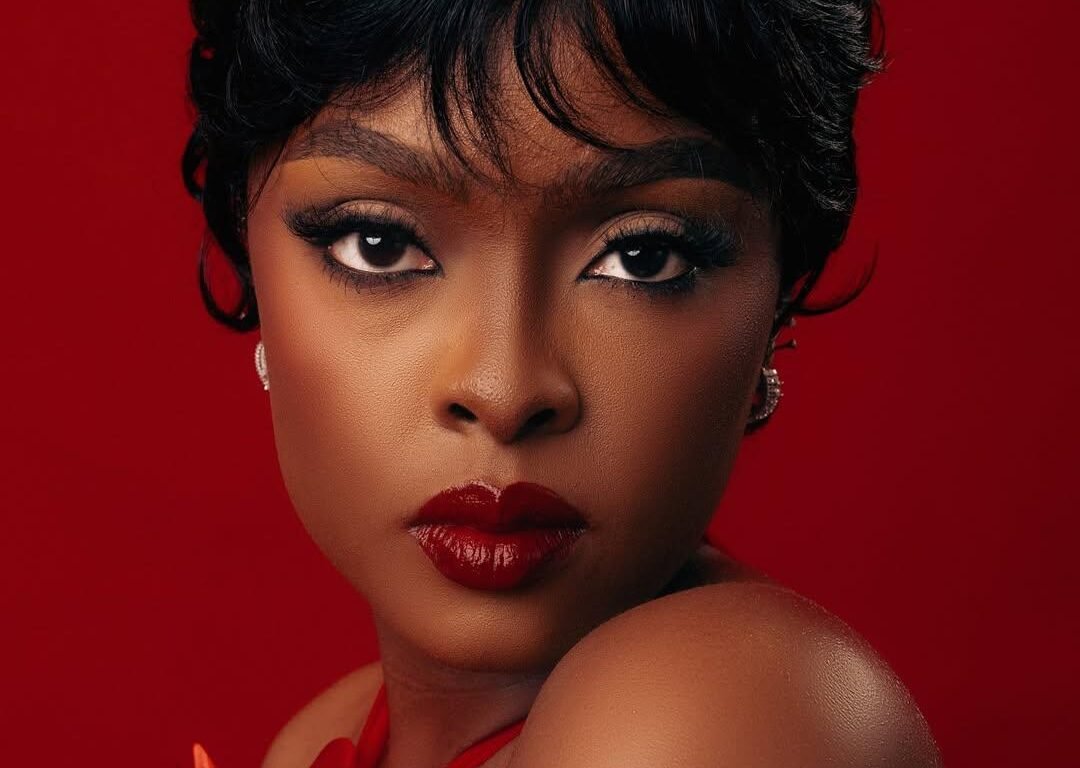
Ruby Akubueze has quietly carved out a space for herself among Nollywood’s rising voices. From her breakthrough as “Frances” in MTV Shuga Naija to her intense role in Ijogbon, she’s shown a knack for picking stories that challenge her and stretch her craft.
In her latest starring, 3 Cold Dishes, she leans even further playing a role that demands vulnerability, restraint, and an emotional sharpness. DigiMillennials sat down with the rising star about her journey, recent AMAA award, her latest role in 3 Cold Dishes and so much more.
You knew early on that you wanted to act. When did you first realise this was the path for you?
I think for me, my acting experience started in 2011 in church. But I knew I wanted to pursue this profession very early on. I already saw myself in that field from a young age.
And I know for actors, getting into character can sometimes be challenging. How do you stay connected to the characters you play?
For me, it starts with understanding the production and the story. Every character has their own world. So I focus on doing the work: understanding who my character is, her backstory, her inspirations, where she comes from. I build that world so that when I get on set, slipping into character becomes seamless.
I first saw you on screen in Ijobon, which is an amazing film. What attracted you to that role?
The dynamics of my character really drew me in. In my uni days, I was the only girl among three guys in our friend group. I thought that would be fun to explore. It was also a Yoruba story set in a Yoruba environment. Even though I grew up mostly in the East and I’m more familiar with the Igbo culture and language, the idea of speaking Yoruba in the film excited me.
Since you grew up in the East, how did you prepare to play a Yoruba-speaking character?
That’s where the production is very key. Two of my close friends speak Yoruba, so I reached out to them. They helped me understand the lines and the pronunciations. My assistant director and castmates also supported me a lot. Now, even though I don’t speak Yoruba fluently, I can understand the basics. Some days I speak it, some days I don’t but outside the film, it’s really not who I am. I learned it strictly for the character.
And that experience, how did it shape your growth as an actor?
We filmed in Oyo State, in a village called Igbojaye, during the December–January period. So you can imagine the weather, it was dry, dusty, and hot. Most scenes were shot outdoors. It wasn’t easy at all. We were always running, moving and using a lot of energy. Being in that environment really shaped my resilience. It made me stronger physically and mentally.
You’re starring in 3 Cold Dishes, which explores human trafficking, justice, and revenge which are heavy themes. What made you want to be part of that story?
I’m very drawn to stories that are larger than me as an actor and have depth. I am drawn to stories that need to be told. Even before I read the script, I knew I wanted to be involved. After I read it, I felt completely pulled in. It’s such an important story, and I don’t think we discuss themes like trafficking enough in African cinema. That made me want to be part of the project even more.
How did you handle the emotional weight of a film like that? Some roles can drain an actor.
True. But no matter how deep I go into a character, I always remind myself that I’m still me. When the director says “cut,” I leave the character on set. I’m very intentional about that separation so I don’t carry the emotional weight home.
The film was shot in different countries with a diverse cast and crew. What was the experience like on set?
I had worked with the director before, so adapting was easy. The cast and crew were amazing, many familiar faces I had worked with in the past. Of course, it wasn’t without challenges. But once you’re passionate about a story, even the hard moments become part of the journey. And seeing the final picture makes it worth it.
The film is also executive-produced by big names like Osas Ighodaro and Burna Boy. What was it like working on such a high-profile set?
One of my most memorable experiences was getting to travel, explore different cultures, and try different foods. I’m a foodie, so that was exciting for me. I didn’t get to work with all the executive producers directly, but I connected a lot with cast members and formed strong bonds on set.
Speaking of food, was there anything unforgettable that you tried?
Oh my God, yes! I love how they make their fried rice. There was this local dish called “aloko” in Burkina Faso. It was so good. The rice they served with it was steeped and rich. I enjoyed it a lot. I also ate plenty of protein because they focus more on proteins unlike what we do. I honestly impressed myself. I came back home and even gained a little weight, something that never happens!
You recently won Best Promising Actress at the AMAA Awards. How did that feel?
It felt surreal. I was nominated last year but didn’t win, so getting it this year felt even more special. It’s like confirmation that I’m doing something right. Receiving that recognition was a big moment for me.
Switching gears to your advocacy work which are anti-bullying and youth programs. What inspires your involvement?
My mom. She does a lot of work supporting people, especially children. Growing up, I watched her help others constantly, and that shaped me. So for me, having a platform means having the responsibility to make impactful change. I try my best to give back.
And you sing and model too. How do you balance being so multifaceted?
Honestly, it’s not always easy. There are moments when it gets overwhelming. But I try to pace myself and avoid taking on too much at once. I listen to my body. I take breaks when I need to. I want to give my best without burning out, so I’ve learned to create balance where I can.
Looking back on your journey, what are some of the biggest lessons you’ve learned?
One of the biggest lessons is learning to believe in myself. As creatives, we struggle with self-doubt and impostor syndrome a lot. But I’ve learned to push aside self-sabotage. When I walk into a room now, I remind myself I’m there because I deserve to be there. I’ve worked hard for it.
Finally, what do you hope people feel when they watch you on screen?
I want people to know their dreams are possible. I grew up in Aba, in a place people often look down on, a place many don’t expect greatness to come from. But here I am. So I want people to know that no matter their background, their dreams are valid and absolutely possible.